
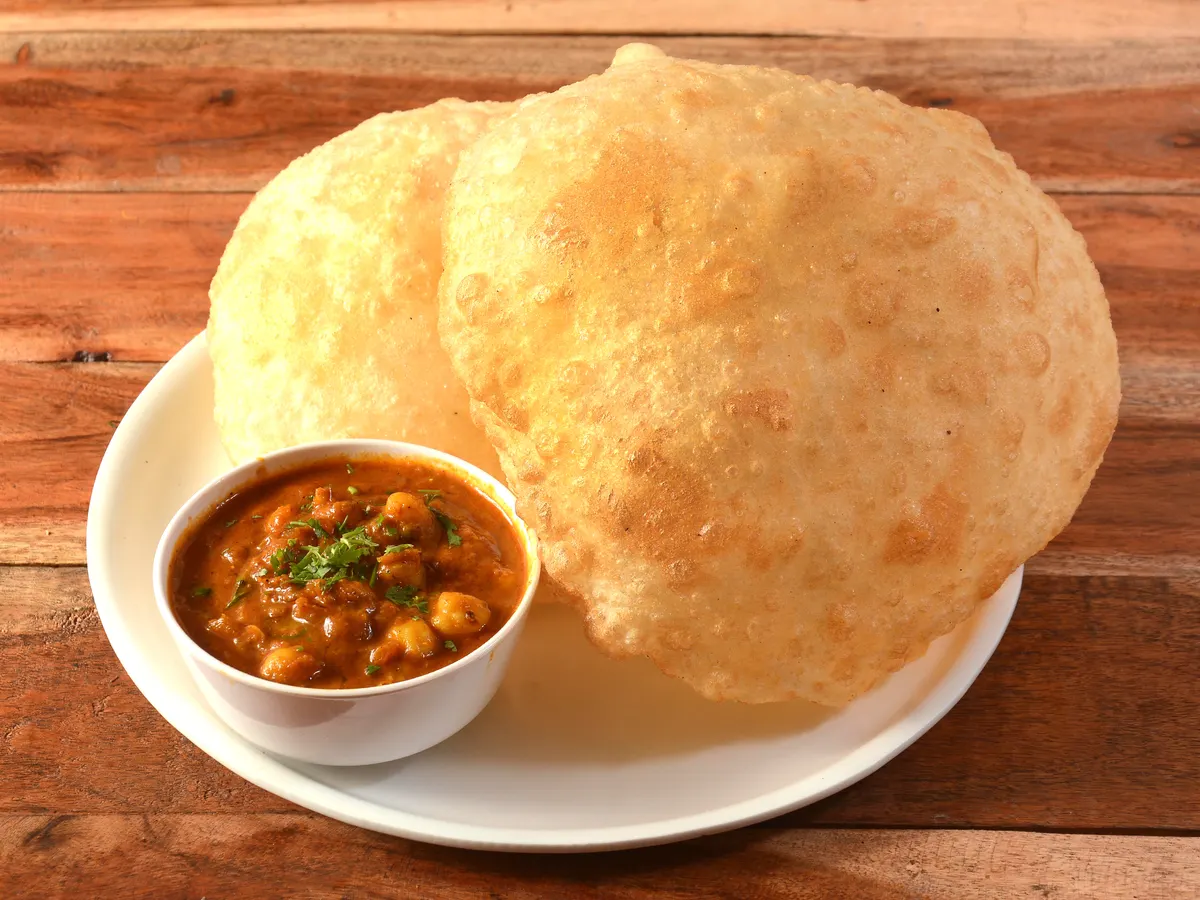
Journeys & Food · November 17, 2026
There is no single Indian cuisine. India has 28 states, dozens of languages and climates that run from Himalayan snow to tropical coast, and the food changes as much as the landscape. Wheat breads and dairy rule the north, rice and coconut the south. Some communities eat no meat at all, others are famous for their mutton and fish.
What ties it together is the way spices are used: whole spices fried in hot oil or ghee to start a dish, ground spice blends like garam masala added as it cooks, and a sizzling tempering (tadka) poured over at the end. This guide goes region by region through the Indian dishes you’ll see most often, with a recipe for each one we have. There’s a list of Indian food names near the end for quick reference.
North India and Punjab: curries, tandoor and breads
Most of the dishes that Indian restaurants abroad made famous come from Punjab, in the northwest. It is farming country, so the food is hearty and rich in butter, cream and wheat. Butter chicken and dal makhani were created in Delhi restaurants after 1947 by Punjabi cooks, and tandoori chicken comes from the clay tandoor oven, the same oven that bakes naan.
Everyday Punjabi home cooking is simpler and mostly vegetarian: chana masala or chole (chickpea curry), rajma (kidney beans), aloo gobi, baingan bharta (smoky eggplant), and paratha stuffed with spiced potato for breakfast, with a glass of lassi.
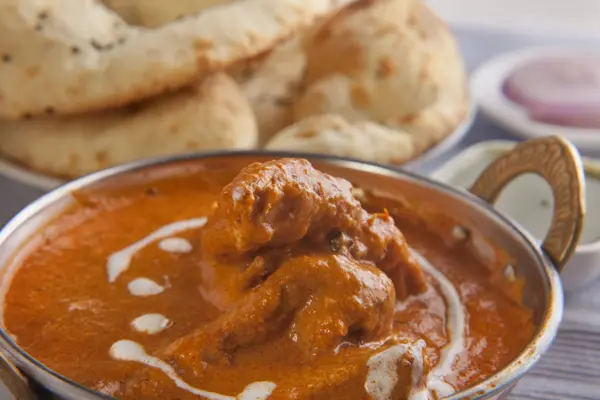
Butter Chicken
Tender chicken in a creamy, mildly spiced tomato and butter sauce. India's most-loved curry, made for naan and rice.
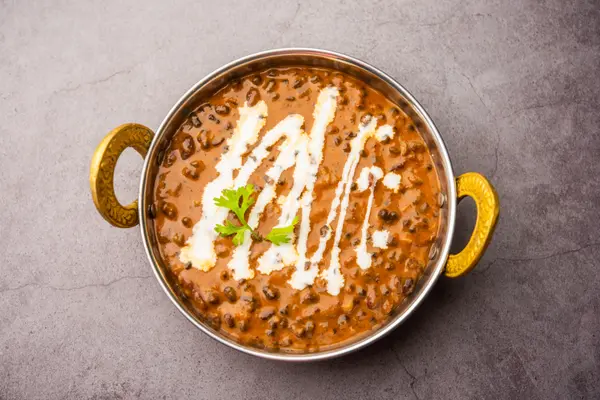
Dal Makhni
Punjab's rich black lentil and kidney bean stew, simmered slowly and finished with butter and cream. Wonderful with naan or rice.
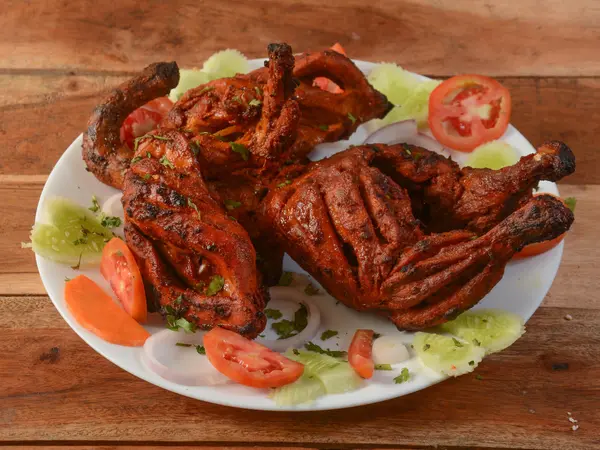
Tandoori Chicken
Chicken marinated in spiced yogurt, ginger, garlic and lemon, then roasted at high heat until charred at the edges. Serve with naan and onion salad.
Chana Masala
Chickpeas simmered in a tangy, deeply spiced onion and tomato gravy: the Punjabi chickpea curry that is vegan and feeds a crowd.
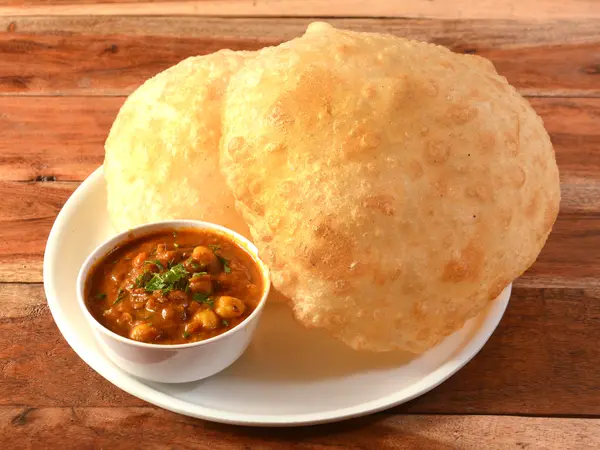
Chole Bhature
North India's favorite feast: spiced chickpea curry with tomatoes, ginger and warming spices, eaten with puffy fried bhature bread.
Rajma
Punjabi red kidney beans simmered in a thick onion, tomato and garam masala gravy, eaten with rice.
Aloo Gobi
Potatoes and cauliflower cooked dry with cumin, turmeric, ginger and tomato until golden at the edges: the Punjabi home classic.
Baingan Bharta
Eggplant charred over an open flame until smoky and soft, then mashed and cooked with onion, tomato, garlic and green chili.
Paneer Butter Masala
Soft cubes of paneer in a silky, mildly spiced tomato, butter and cashew sauce: the vegetarian twin of butter chicken.
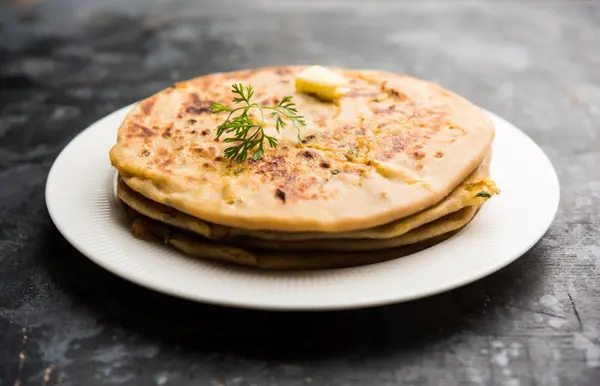
Aloo Paratha
Whole wheat flatbreads stuffed with spiced mashed potato and cooked on a griddle with butter. North India's favorite breakfast, with yogurt and pickle.
Naan
Soft, bubbly yogurt flatbread cooked in a very hot skillet and brushed with garlic butter.
Mughlai and royal kitchens: Lucknow, Hyderabad and Kashmir
The Mughal emperors and the nawabs who followed them brought Persian and Central Asian cooking to India: slow-cooked meat, saffron, nuts, cream and the dum method, where a pot is sealed with dough and cooked gently so nothing escapes. Biryani is the most famous result. Lucknow’s is delicate and fragrant, Hyderabad’s is layered with raw marinated meat and cooked together, and Kolkata’s has a potato and a boiled egg in it.
Lucknow is also known for galouti kebabs, soft enough to melt on the tongue. In Kashmir, the wazwan feast has dozens of meat courses, among them rogan josh and gushtaba (meatballs in yogurt), and Kashmiri Pandit cooks make dum aloo without onion or garlic. Kahwa, green tea with saffron and almonds, ends the meal.
Lucknowi Biryani
Lucknow's elegant Awadhi biryani: meat and rice cooked separately in rich stock, then layered with saffron and sealed for dum.
Hyderabadi Dum Biryani
Hyderabad's famous biryani: raw marinated meat and half-cooked rice layered and slowly steamed together in a sealed pot.
Kolkata Biryani
A light, fragrant biryani from Kolkata with mutton, saffron, rose water and the famous potato and egg, cooked dum style.
Galouti Kebab
Lucknow's melt-in-the-mouth lamb kebabs, made from very finely minced meat tenderized with raw papaya and dozens of spices.
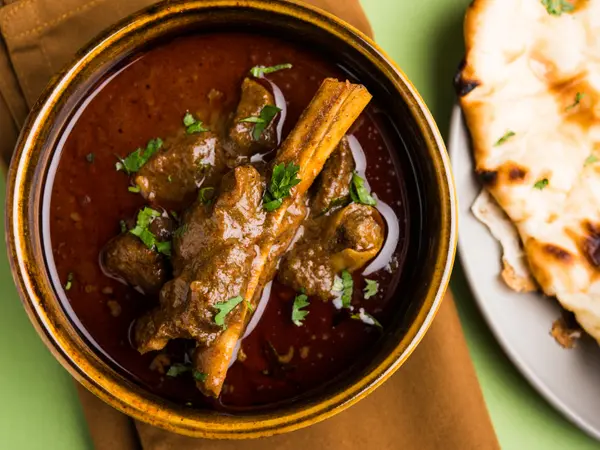
Rogan Josh
Kashmir's aromatic lamb curry, slow-cooked in yogurt with warming spices and Kashmiri chilies that give it a deep red color.
Gushtaba
Velvety pounded mutton balls simmered in a yogurt and fennel gravy. The final, royal dish of the Kashmiri wazwan feast.
Dum Aloo
Baby potatoes fried until golden, then slow-cooked in a yogurt gravy spiced with fennel, dry ginger and Kashmiri chili, Kashmir style.
Kashmiri Kahwa
Kashmir's golden green tea brewed with saffron, cardamom and cinnamon, served with sliced almonds. Warms Srinagar's winters.
South India: dosa, idli, sambar and coconut
The food of Tamil Nadu, Kerala, Karnataka, Andhra Pradesh and Telangana is built on rice and lentils. Ground together and fermented overnight, they make the batters for dosa (crisp crepes) and idli (steamed cakes), the breakfast of the south. Both come with sambar, a tangy lentil and vegetable stew, and coconut chutney. Medu vada, savory lentil doughnuts, join them on the plate.
A South Indian meal is eaten on a banana leaf, with rice and a run of dishes: sambar, then rasam (a thin peppery broth), then yogurt rice to finish. Kerala cooks with coconut and coconut oil: fish curry soured with tamarind, appam with a mild stew, and puttu for breakfast. Chettinad chicken, from Tamil Nadu, is famous for its black pepper and roasted spices, and Karnataka gives us bisi bele bath and Mysore pak.
Masala Dosa
A thin, crisp fermented rice and lentil crepe folded around a turmeric potato filling, served with sambar and coconut chutney.
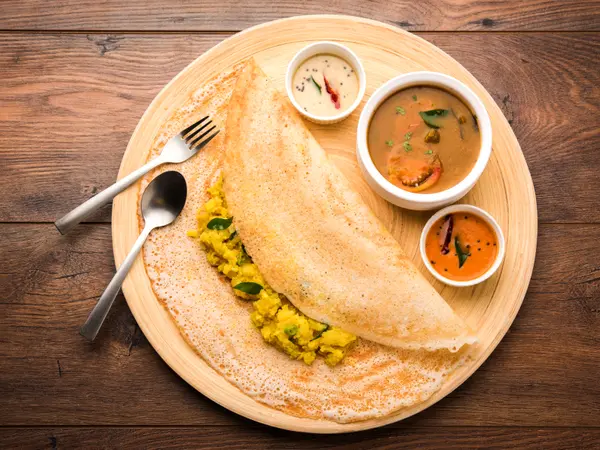
Dosa
South India's thin, crisp fermented rice and lentil crêpe. Serve with sambar and coconut chutney.
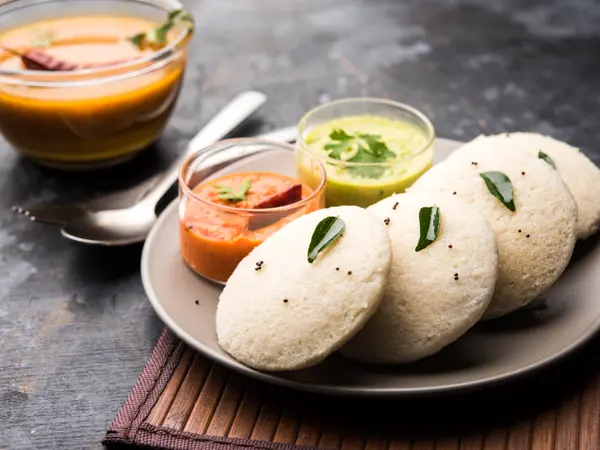
Idli
South India's soft, fluffy steamed cakes made from a fermented rice and lentil batter. Serve them with sambar and coconut chutney.
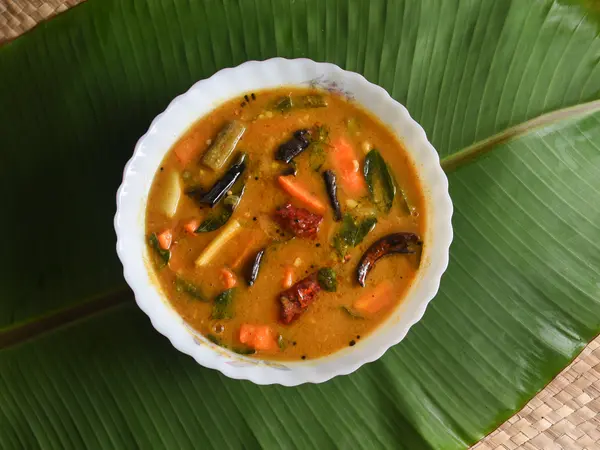
Sambhar
South India's tangy lentil and vegetable stew, simmered with tamarind and sambar powder. Serve it with rice, idli or dosa.
Medu Vada
Crisp, fluffy lentil doughnuts made from soaked urad dal, fried golden and served with sambar and coconut chutney for a South Indian breakfast.
Coconut Chutney
South India's fresh coconut chutney with roasted chana dal and a mustard seed and curry leaf tempering. Made for idli and dosa.
Rasam
A thin, peppery tomato and tamarind broth from South India, tempered with mustard seeds, garlic and curry leaves, for drinking or pouring over rice.
Kerala Fish Curry
Kochi's fiery, sour red fish curry cooked with kodampuli (fish tamarind) in a clay pot, getting better a day later.
Appam and Stew
Lacy, bowl-shaped rice and coconut pancakes with soft centers, served with a mild Kerala stew of chicken or vegetables in coconut milk.
Puttu
Kerala's steamed cylinders of rice flour layered with fresh coconut, eaten with chickpea curry (kadala) or banana.
Chettinad Chicken
A fiery Tamil Nadu chicken curry made with a freshly roasted paste of black pepper, fennel, coconut and dried red chilies.
Bisi Bele Bath
Karnataka's hot lentil rice: rice, toor dal and vegetables cooked with tamarind and a special spice powder, finished with ghee.
Upma
South Indian savory semolina porridge with mustard seeds, curry leaves, ginger and vegetables.
West India: Mumbai street food, Gujarat, Goa and Rajasthan
Mumbai lives on street food: vada pav (a potato fritter in a bun), pav bhaji (buttery mashed vegetable curry with soft rolls), and the Bombay sandwich. Gujarat, next door, is mostly vegetarian and loves a touch of sweetness in savory food: steamed dhokla, rolled khandvi and undhiyu, a winter dish of mixed vegetables.
Goa is different again. Four centuries of Portuguese rule left vinegar, pork and bread in the kitchen, so there is vindaloo, xacuti and coconut fish curry, and bebinca, a layered coconut cake, for Christmas. Along the Konkan coast, a meal ends with a glass of pink sol kadhi. Rajasthan, in the desert, cooks with little water and lots of ghee: dal baati churma, and laal maas, a fiery mutton curry.
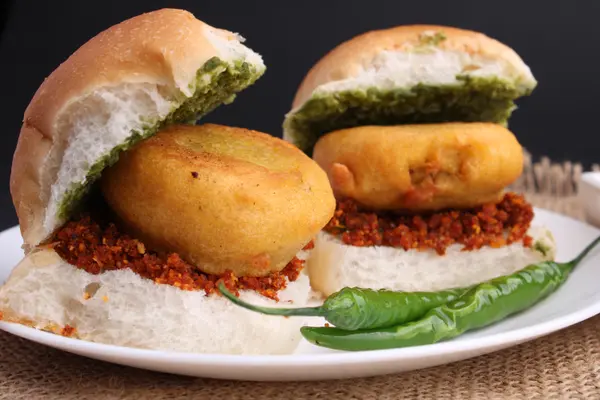
Vada Pav
Mumbai's favourite street snack: a spiced potato fritter in chickpea batter, tucked into a soft pav bun with green and garlic chutneys.
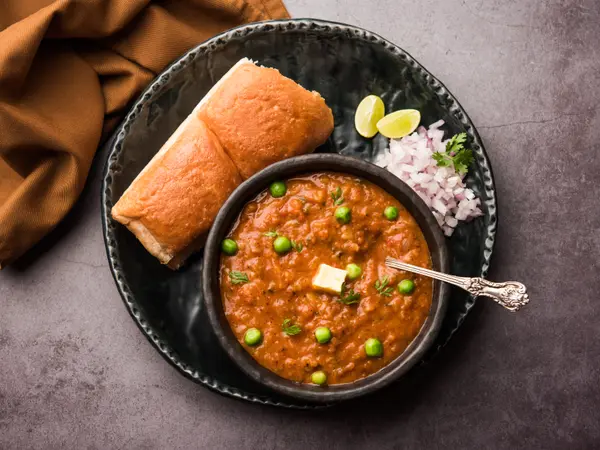
Pav Bhaji
Mumbai's spicy mashed vegetable curry of potatoes, peas, peppers and tomatoes, served with soft buttered buns and chopped onion.
Bombay Sandwich
Mumbai's street sandwich: buttered bread layered with green chutney, potato, beet, cucumber, tomato and onion, sprinkled with chaat masala and grilled.
Khaman Dhokla
Soft, spongy steamed chickpea flour cakes from Gujarat, topped with sizzling mustard seeds, curry leaves and green chilies.
Khandvi
Silky Gujarati rolls of chickpea flour and buttermilk, cooked into a thin sheet, rolled and topped with a mustard seed tempering.
Undhiyu
Gujarat's winter vegetable feast: purple yam, beans, baby eggplants and potatoes slow-cooked with fenugreek dumplings and green masala.
Goan Fish Curry
Goa's everyday coconut fish curry, tangy with kokum or tamarind and bright red from Kashmiri chilies. Served with rice.
Chicken Xacuti
Goa's complex chicken curry made with a dark paste of roasted coconut, poppy seeds, star anise and over a dozen spices.
Chicken Vindaloo
Goan vindaloo: fiery, tangy curry with chilies, vinegar, garlic and warm spices.
Bebinca
Goa's Christmas cake of many thin layers of coconut milk, egg yolk and ghee, each baked under the broiler until golden.
Sol Kadhi
A pink, tangy drink of fresh coconut milk and kokum with garlic and green chili, sipped after a spicy Konkan seafood meal.
Dal Baati Churma
Rajasthan's famous trio: hard baked wheat balls dunked in ghee, spicy five-lentil dal, and sweet crumbled churma.
Laal Maas
Rajasthan's fiery red mutton curry, colored and heated with Mathania chilies and cooked with yogurt, garlic and ghee.
East India: Bengal and its sweets
Bengal, around Kolkata, is the land of fish, rice and mustard. Its cooks use mustard oil and panch phoron, a five-seed spice mix, and make simple vegetable dishes like aloo poshto, potatoes in a poppy seed paste. Kolkata is also the birthplace of the kathi roll, a paratha wrapped around kebab.
Bengal is most famous for sweets made from fresh cheese (chhena): spongy rasgulla soaked in syrup, and mishti doi, sweet yogurt set in clay pots.
Aloo Poshto
A Bengali favorite: potato cubes cooked in mustard oil with a paste of white poppy seeds and green chilies until nutty and creamy.
Kathi Roll
Kolkata's famous street roll: a flaky paratha fried with egg, wrapped around spicy grilled chicken kebab, onion and green chili.
Rasgulla
Soft, spongy Bengali cheese balls cooked in light sugar syrup, served chilled.
Mishti Doi
Bengal's sweet, set yogurt made with caramelized sugar and reduced milk, traditionally set in clay pots. A Kolkata after-meal must.
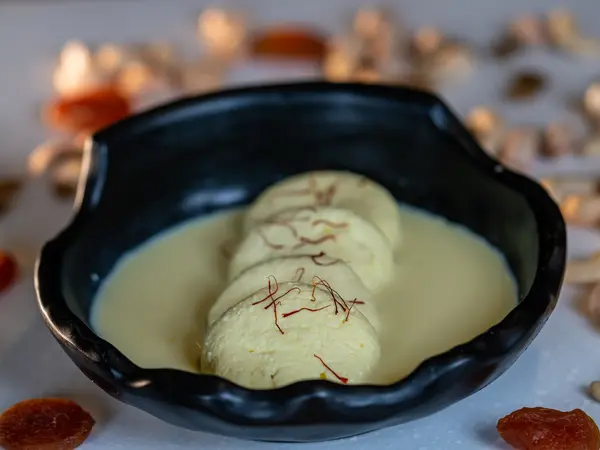
Rasmalai
Soft paneer dumplings in cardamom and saffron milk.
Street food and snacks
Chaat is the umbrella word for India’s tangy, crunchy, savory snacks, sold from carts everywhere. Pani puri are hollow crisp shells filled with spiced water. Bhel puri is puffed rice tossed with chutneys and onions. Aloo tikki are fried potato patties topped with chickpeas, yogurt and chutney. Samosas and pakoras are eaten at teatime with masala chai, all over the country.
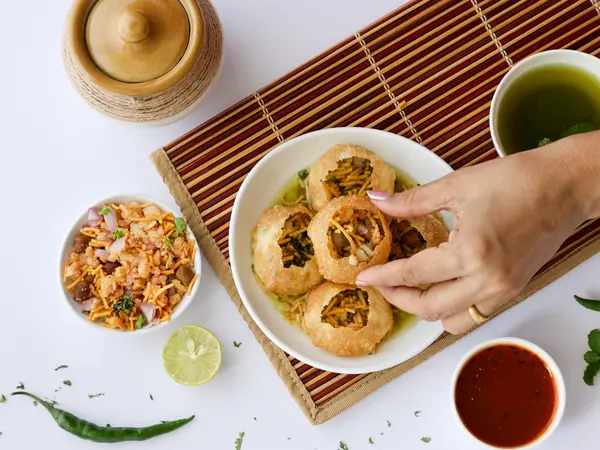
Pani Puri
India's favorite street snack: crisp hollow puris filled with spiced potato and chickpeas, then dunked in tangy spiced water.
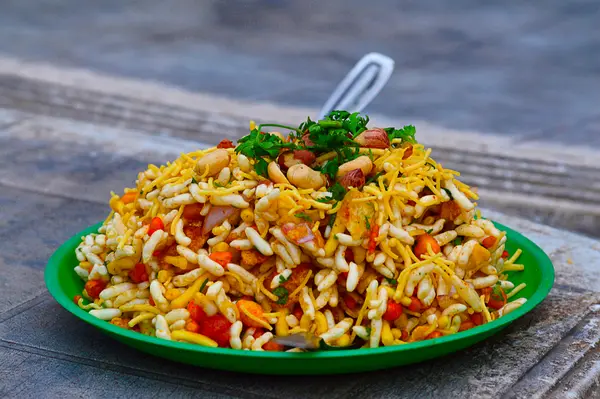
Bhel Puri
Mumbai's favorite street snack: puffed rice tossed with potato, onion, tomato, crisp sev and sweet-and-tangy chutneys. Eat it straight away.
Aloo Tikki
Crisp, golden spiced potato patties shallow-fried on a griddle, served with green and tamarind chutney or turned into chaat.
Samosa
Punjabi samosas: flaky pastry cones stuffed with spiced potato and peas, fried slowly until crisp.
Pakora
Crisp Indian vegetable fritters in spiced chickpea-flour batter, with mint chutney.
Curries, potatoes, drinks and sweets
Most Indian cooks don’t use the word curry: each dish has its own name. Our guide to the types of curry covers the Indian ones (korma, vindaloo, rogan josh, xacuti and more) next to curries from the rest of the world.
Potatoes are in almost every Indian kitchen, and we have a whole post of Indian potato recipes. There are also guides to traditional Indian drinks, from chai to falooda, and to easy Indian desserts you can make at home.
Indian food names: a quick list
The names of the Indian dishes in this guide, what they are in English, and a link to our recipe for each.
| Dish | In English | What it is |
|---|---|---|
| Aloo | Potato | In dish names: aloo gobi, aloo matar, aloo paratha |
| Gobi | Cauliflower | Aloo gobi: potato and cauliflower cooked dry with spices |
| Chana or chole | Chickpeas | Chana masala: chickpeas in onion and tomato gravy |
| Rajma | Kidney beans | Red kidney beans in a Punjabi gravy |
| Dal | Lentils | Any lentil or split pea, and the dish made from it |
| Paneer | Fresh cheese | Firm cheese that holds its shape; paneer butter masala |
| Palak or saag | Spinach or greens | Saag aloo, saag paneer |
| Baingan | Eggplant | Baingan bharta: smoky mashed eggplant |
| Bhindi | Okra | Bhindi masala: okra fried with onion and spices |
| Matar | Green peas | Aloo matar, keema matar |
| Keema | Ground meat | Spiced minced lamb or goat |
| Anda | Egg | Anda curry: boiled eggs in masala |
| Murgh | Chicken | Murgh makhani is butter chicken |
| Biryani | Layered rice | Rice and meat cooked together on dum |
| Masala | Spice mix | Garam masala is the warm blend used in most North Indian dishes |
| Tadka | Tempering | Spices sizzled in hot oil or ghee and poured over a dish |
| Dosa | Rice and lentil crepe | South Indian breakfast; masala dosa has a potato filling |
| Idli | Steamed rice cake | Soft, fermented, served with sambar |
| Sambar | Lentil and vegetable stew | Tangy with tamarind, eaten with rice, dosa and idli |
| Rasam | Pepper broth | Thin tomato, tamarind and pepper soup |
| Vada | Fritter | Medu vada (lentil), batata vada (potato) |
| Roti or chapati | Flatbread | Everyday whole wheat bread cooked on a griddle |
| Naan | Tandoor bread | Leavened bread baked in a clay oven |
| Paratha | Layered or stuffed flatbread | Pan-fried in ghee; aloo paratha is stuffed with potato |
| Raita | Yogurt side | Cool yogurt with cucumber or other vegetables |
| Chutney | Relish or sauce | Fresh mint, coconut or tamarind chutneys |
| Chaat | Savory snack | Tangy street snacks like pani puri and bhel puri |
| Chai | Spiced milk tea | Masala chai: tea brewed with milk and spices |
| Lassi | Yogurt drink | Sweet, salted or mango |
| Mithai | Sweets | Ladoo, barfi, gulab jamun and more |
How Indians eat
A home meal is usually a thali: a plate with rice or bread in the middle and small bowls of dal, one or two vegetable dishes, yogurt or raita, pickle and something sweet around it. Food is often eaten with the right hand, tearing roti to scoop up curry or mixing rice and dal with the fingertips.
Many Indians are vegetarian, for religious or family reasons, and Hindu, Muslim, Jain and Sikh rules all shape what goes on the table. Jains, for example, eat no root vegetables, so no onion, garlic or potato. That is why Indian food has more vegetarian dishes than almost any cuisine in the world.
Aloo Gobi
Potatoes and cauliflower cooked dry with cumin, turmeric, ginger and tomato until golden at the edges: the Punjabi home classic.
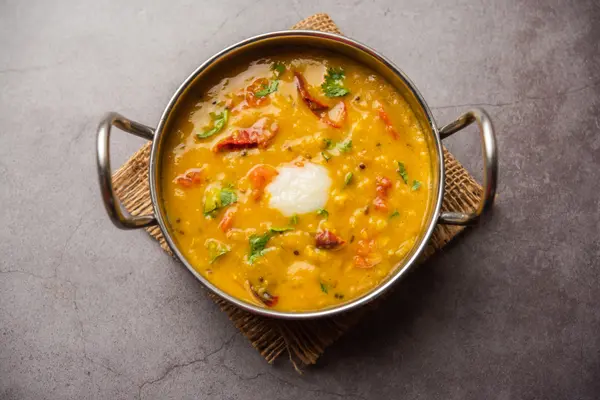
Dal Tadka
North India's everyday comfort dal: soft yellow lentils finished with a sizzling tempering of ghee, cumin, garlic and chilies.
Cucumber Raita
Cool yogurt with grated cucumber, roasted cumin and mint, made to calm down biryani, parathas and curries.
Jeera Rice
Fluffy basmati rice tempered with cumin seeds and ghee. The easy side for any curry.
Frequently asked questions
What is the most popular food in India?
It depends on the region, but dal (lentils) with rice or roti is eaten in almost every Indian home every day. Biryani is often named the most ordered dish in the country, and butter chicken, chole, dosa and samosa are among the best known.
What is the national dish of India?
India has no official national dish. Khichdi (rice and lentils cooked together) is often suggested because it is eaten everywhere, and biryani and butter chicken are the dishes most people abroad think of.
Is Indian food always spicy?
No. Indian food is spiced, but not always hot. Many dishes, like korma, paneer butter masala, aloo matar and most South Indian breakfasts, are mild. The heat comes from fresh or dried chilies, and you can use as few as you like.
What is the difference between North and South Indian food?
North Indian food leans on wheat breads (roti, naan, paratha), dairy (ghee, paneer, cream) and thick onion and tomato gravies. South Indian food is built on rice, lentils and coconut, with fermented batters for dosa and idli, tamarind for sourness and curry leaves and mustard seeds for flavor.
What are some easy Indian dishes for beginners?
Start with dal tadka, jeera aloo, aloo matar, chana masala or egg curry. They use everyday spices, take under an hour, and teach the basic method: sizzle whole spices in oil, cook onion, ginger and garlic, then add tomatoes and ground spices.
Is most Indian food vegetarian?
A large share of Indians are vegetarian, so Indian cooking has a huge range of vegetarian dishes, made with lentils, beans, paneer, vegetables and yogurt. Many regions also have famous meat and fish dishes, especially Kashmir, Kerala, Goa, Bengal and Hyderabad.
Keep exploring
More from Food around the world
- Indian potato recipes: 26 aloo dishes to cook at homeIndian potato recipes from across the country: aloo gobi, jeera aloo, dum aloo, Bombay potatoes, aloo matar, samosa, aloo tikki, masala dosa and more.
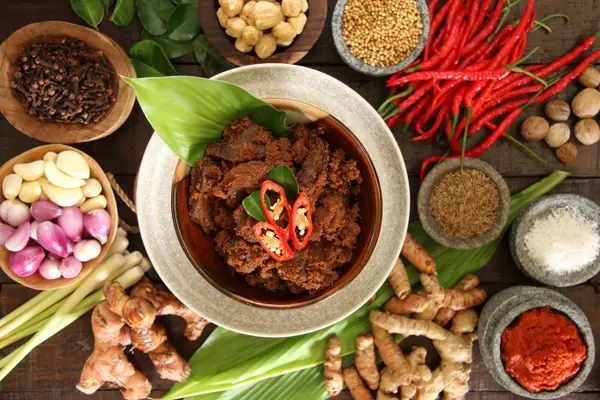 Types of curry: 50 curries from around the worldThe different types of curry, from thick, mild Japanese curry and slow-cooked beef rendang to Thai green curry, Indian korma and vindaloo, Caribbean curry goat and Durban bunny chow. With recipes for each.
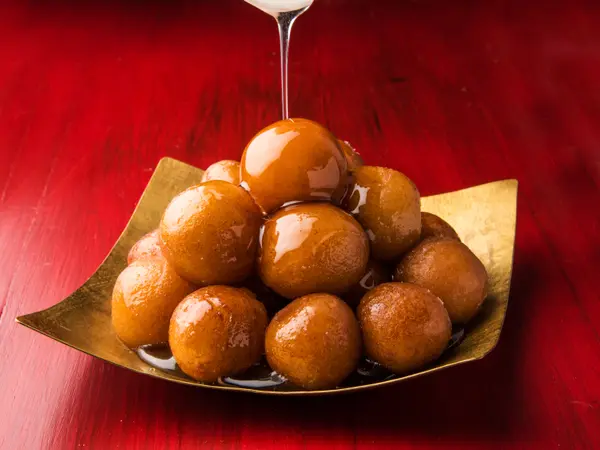 Easy Indian desserts to make at home: 20 sweetsEasy Indian desserts to make at home: sooji halwa, shrikhand, coconut ladoo, kheer, kulfi, gulab jamun, rasgulla, Mysore pak and more Indian sweets.