
Journeys & Food · November 17, 2026
Indian sweets (mithai) are made for every celebration: a new baby, a wedding, an exam result, Diwali, Eid. Many are sold by sweet shops, but plenty are easy to make at home with milk, sugar, ghee, flour and cardamom.
We’ve started with the easiest, ready in under 30 minutes of work, then the classic syrup and milk sweets, then the special-occasion ones.
Quick and easy: ready in 30 minutes or so
Sooji halwa is semolina toasted in ghee and cooked with sugar syrup; it takes 20 minutes and is made for prayers and good news. Coconut ladoo need only coconut, milk and sugar. Besan ladoo are chickpea flour roasted in ghee and rolled into balls. Semiya payasam, vermicelli simmered in milk with cashews and raisins, is the quickest of the milk puddings.
Shrikhand takes five minutes of work: thick strained yogurt with sugar, saffron and cardamom. It just needs time to drain.
Sooji Halwa
Semolina toasted in ghee until golden, then cooked with sugar syrup, cardamom and nuts into a warm, soft pudding: ready in 20 minutes.
Coconut Ladoo
Soft balls of fresh coconut cooked with milk, sugar and cardamom: one of the easiest Indian sweets to make at home.
Besan Ladoo
Melt-in-the-mouth Indian sweets of roasted gram flour, ghee, sugar and cardamom, rolled into balls.
Semiya Payasam
Toasted vermicelli simmered in milk with sugar, cardamom, ghee-fried cashews and raisins: a warm South Indian milk pudding for festivals.
Shrikhand
Thick strained yogurt sweetened and flavored with saffron and cardamom: a cool, creamy dessert from Maharashtra and Gujarat.
Milk puddings and frozen sweets
Kheer is rice cooked slowly in milk until creamy, with cardamom and nuts. Gajar halwa is grated carrot cooked down in milk and ghee, the winter favorite of North India. Kulfi is Indian ice cream: milk boiled down until thick, then frozen in molds, so it is denser and creamier than Western ice cream. Mishti doi is Bengal’s sweet yogurt, set in clay pots.
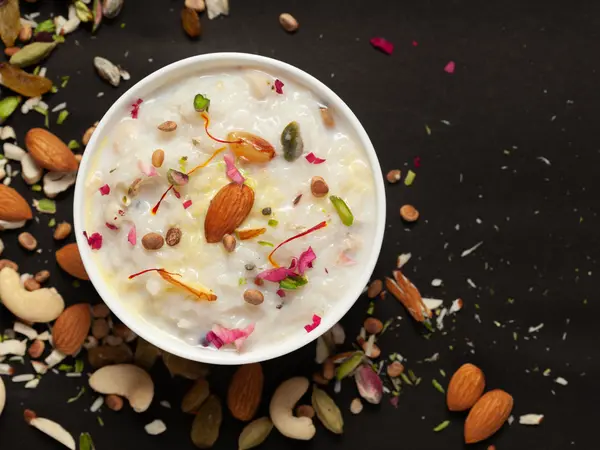
Kheer
Rice slow-cooked in milk with sugar, cardamom and nuts.
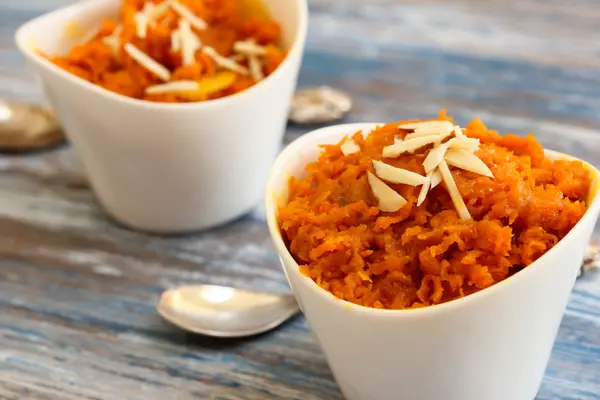
Carrot Halwa
North India's winter dessert of grated carrots slowly cooked in milk with ghee, sugar and cardamom, finished with nuts and raisins.
Kulfi
Dense Indian frozen milk dessert with cardamom, saffron and pistachios, made the no-churn way.
Mishti Doi
Bengal's sweet, set yogurt made with caramelized sugar and reduced milk, traditionally set in clay pots. A Kolkata after-meal must.
Syrup sweets: gulab jamun, jalebi and rasgulla
Gulab jamun are soft balls of milk dough fried and soaked in rose and cardamom syrup. Jalebi are crisp spirals of batter dipped in saffron syrup, best warm. Rasgulla and rasmalai, from Bengal and Odisha, are made from fresh cheese (chhena): rasgulla are spongy balls in syrup, rasmalai flat discs in saffron cream.
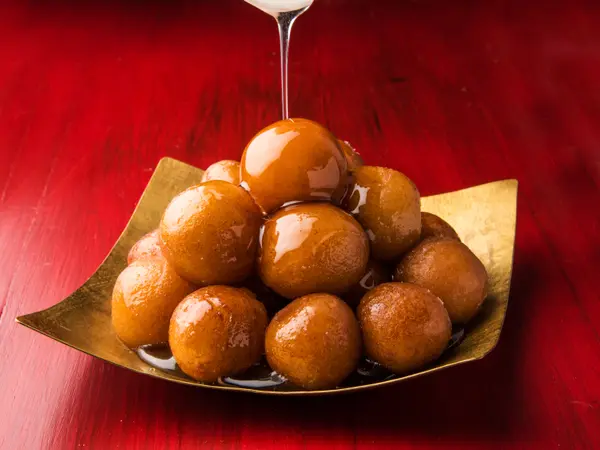
Gulab Jamun
India's festival sweet: soft milk dough balls fried until golden brown, then soaked in warm syrup scented with cardamom.
Jalebi
Crisp, syrup-soaked spirals of fried batter, scented with saffron and cardamom. A Diwali favorite.
Rasgulla
Soft, spongy Bengali cheese balls cooked in light sugar syrup, served chilled.
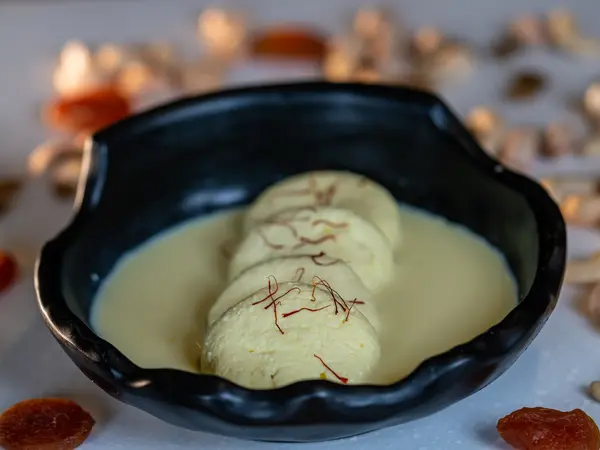
Rasmalai
Soft paneer dumplings in cardamom and saffron milk.
Festival sweets
Mysore pak, a melting gram-flour fudge rich with ghee, came from the kitchens of Mysore Palace. Kaju barfi is cashew fudge, often covered in edible silver leaf for Diwali. Ghewar, a lacy disc of fried batter soaked in syrup, is made in Rajasthan for the monsoon festival of Teej. Double ka meetha, Hyderabad’s bread pudding, is served at weddings and Eid, and bebinca, a many-layered coconut cake, is Goa’s Christmas dessert.
For more, see our Diwali sweets to make at home.
Mysore Pak
A rich, melt-in-the-mouth fudge of gram flour, sugar syrup and plenty of hot ghee, first made in the kitchens of the Mysore Palace.
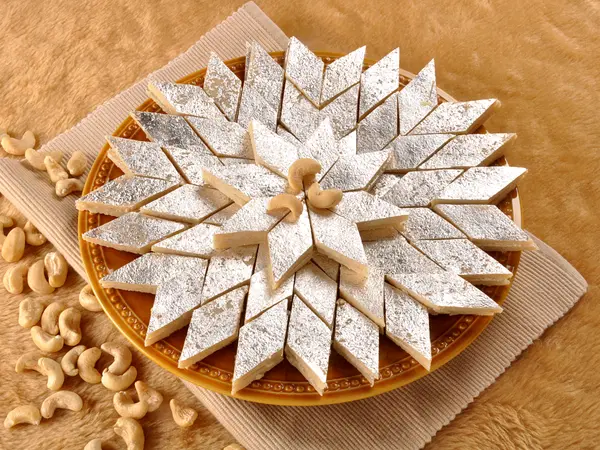
Kaju Barfi
Cashew fudge flavored with cardamom and saffron.
Ghewar
A crisp, lacy, honeycomb-like Rajasthani sweet made by frying batter in ghee, soaked in syrup and topped with rabri.
Double Ka Meetha
Hyderabad's bread pudding: fried bread soaked in saffron sugar syrup, then covered in thick, sweetened reduced milk and nuts.
Bebinca
Goa's Christmas cake of many thin layers of coconut milk, egg yolk and ghee, each baked under the broiler until golden.
Regional specialties
Malaiyo is a winter treat from Varanasi: milk whipped into a light foam overnight in the cold air and flavored with saffron. Meetha paan, a betel leaf folded around gulkand (rose petal jam), coconut and fennel, is eaten after a meal to refresh the mouth.
Malaiyo
A cloud-light winter sweet of whipped milk foam with saffron and cardamom, set out overnight under the dew. Sold only in Varanasi's winter mornings.
Meetha Paan
Betel leaves folded around gulkand (rose petal jam), fennel, coconut and cardamom. Varanasi's famous after-dinner sweet paan.
Frequently asked questions
What is the easiest Indian dessert to make at home?
Sooji halwa is one of the easiest: semolina roasted in ghee, then cooked with sugar water, cardamom and nuts, in about 20 minutes. Shrikhand and coconut ladoo are also easy and need no special skills.
What is the most popular Indian dessert?
Gulab jamun is probably the best known, at weddings and festivals and on every Indian restaurant menu. Jalebi, rasgulla, kheer and kulfi are close behind.
What are Indian desserts made of?
Most are made with milk (boiled down, curdled into fresh cheese or set into yogurt), sugar or jaggery, ghee, and flours like semolina, chickpea flour or rice. Cardamom, saffron, rosewater and nuts like pistachios, almonds and cashews are the usual flavors.
Are there eggless Indian desserts?
Almost all traditional Indian sweets are eggless, because many Indians are vegetarian and don’t eat eggs. Bebinca, from Goa, and some baked desserts are exceptions.
Keep exploring
More from Food around the world
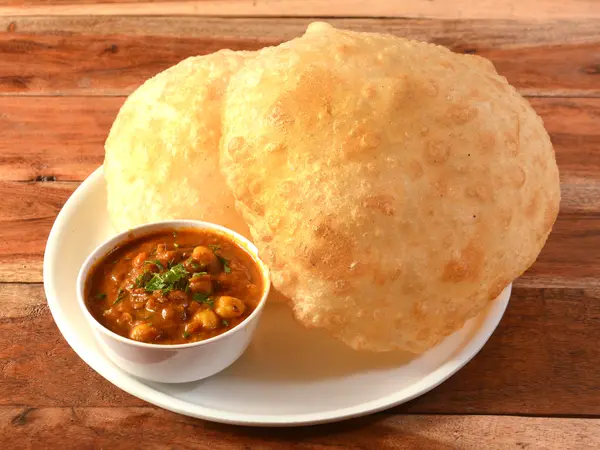 Indian food: a guide to the dishes, region by regionA guide to traditional Indian food, region by region: Punjabi curries and breads, South Indian dosa and sambar, Mumbai street food, Bengali sweets and more, with recipes.
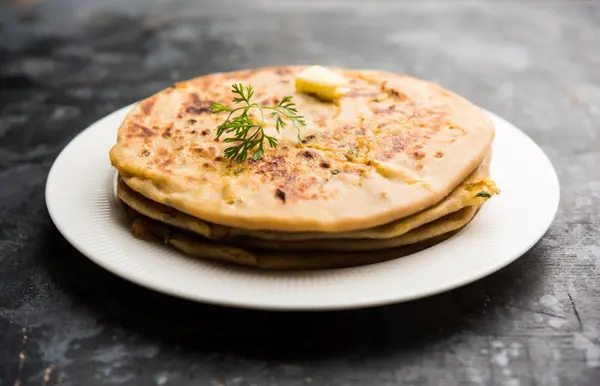 Indian potato recipes: 26 aloo dishes to cook at homeIndian potato recipes from across the country: aloo gobi, jeera aloo, dum aloo, Bombay potatoes, aloo matar, samosa, aloo tikki, masala dosa and more.
 Traditional Greek food: 40 dishes to know, and easy Greek dinners to cookA guide to traditional Greek food: moussaka, pastitsio, souvlaki, stifado, spanakopita and more, plus easy Greek dinner ideas, vegan ladera, desserts, drinks and a list of Greek dish names.