
Journeys & Food · November 17, 2026
Curry isn’t one dish. It’s a family of spiced, saucy dishes that has spread from South Asia to almost every corner of the world, and every place has made it its own. A Japanese curry has more in common with a British stew than with an Indian one. A Thai curry starts from a fresh paste pounded in a mortar. A Caribbean curry is “burned” in hot oil before the meat goes in.
The word most likely comes from kari, a Tamil word for a spiced sauce, picked up by Portuguese and then British traders. Here are the main types of curry, region by region, with a recipe on our site for each one.
Japanese curry: thick, mild and slightly sweet
Japanese curry (kare raisu, or curry rice) arrived in the late 1800s by way of Britain, not India. That is why it starts from curry powder and a butter and flour roux, like an old British curry stew. The navy made it a weekly meal for sailors, and it went on to become one of the most-cooked dinners in Japanese homes.
A good Japanese curry is thick, glossy and gentle, with chicken, carrot, potato and onion, and a little sweetness from grated apple and honey. Most families use boxed roux blocks; our Japanese curry recipe makes the roux from scratch in 5 minutes, so you control the salt and the heat.
Leftovers turn into katsu curry, with a crisp panko cutlet next to the rice. In Sapporo, soup curry is a different thing altogether: a thin, spicy broth with a whole chicken leg and big pieces of roasted vegetables.
Japanese Curry
Mild, thick and slightly sweet Japanese curry with chicken, potato and carrot over rice.
Katsu Curry
A crisp panko-crumbed chicken cutlet sliced over rice and smothered in thick, mild Japanese curry sauce made from scratch.
Soup Curry
Sapporo's thin, spicy curry soup with a whole chicken leg and big pieces of roasted vegetables, served with rice on the side.
Rendang: the slow-cooked dry curry of Indonesia and Malaysia
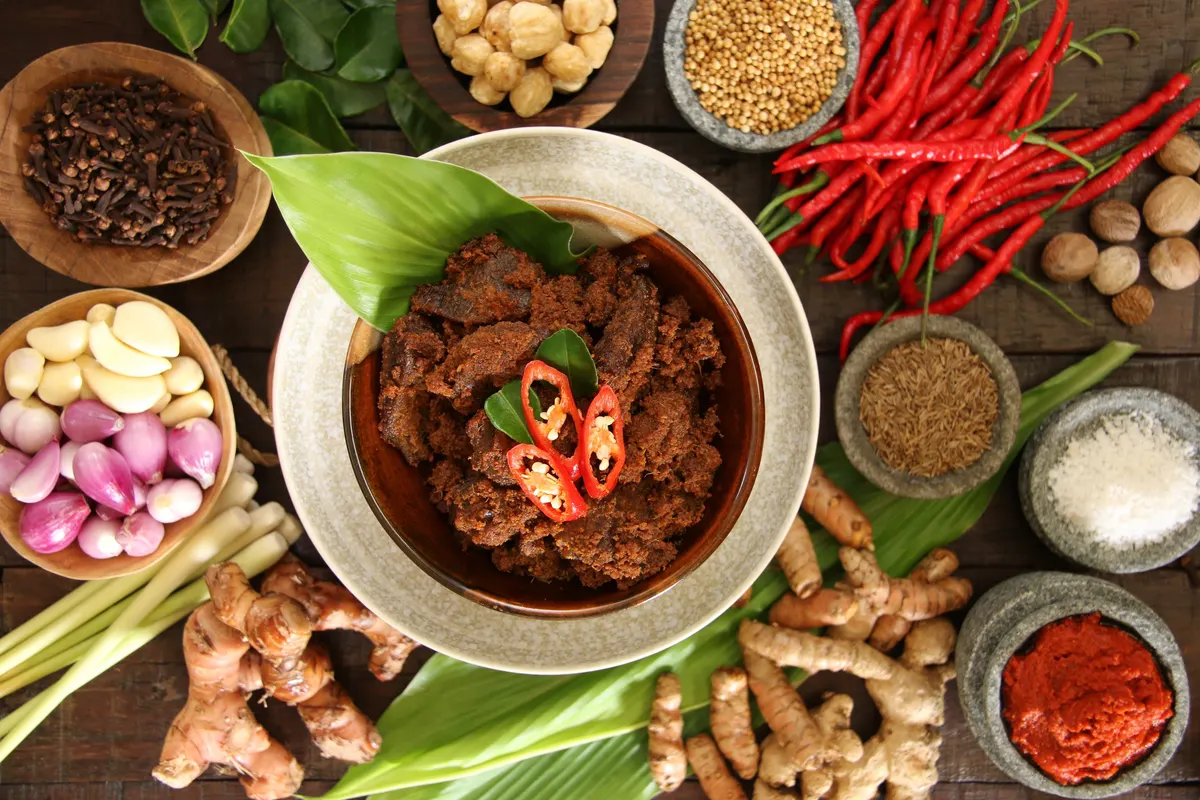
Rendang comes from the Minangkabau people of West Sumatra. Beef is simmered for hours in coconut milk and a paste of chilies, shallots, garlic, ginger, galangal, lemongrass and turmeric, stirred all the while, until the liquid is gone and the oil fries the paste around the meat. The result is dark, rich and almost dry, a curry made to keep for days. In 2011 it topped a CNN readers’ poll of the world’s most delicious foods.
Stop earlier, while the sauce is still wet and golden, and you have kalio. Malaysian rendang is often finished with kerisik, pounded toasted coconut, and whole spices like star anise and cardamom. Give it time: most of the 3 hours is hands-off simmering, and rendang tastes even better the next day.
Rendang
West Sumatra's celebrated dry beef curry, simmered for hours in coconut milk and spice paste until the sauce clings to tender, dark beef.
Rendang
Malaysia's famous slow-cooked beef curry, simmered in coconut milk, lemongrass and spices until the sauce turns dark and clings to the meat.
More curries from Indonesia, Malaysia and Singapore
Not every curry in the region is dry. Opor ayam is a mild, golden chicken curry in coconut milk, eaten with ketupat rice cakes at Eid. Gulai ayam is the yellow coconut chicken curry on every nasi Padang table. Laksa turns curry into a noodle soup, and Penang’s nasi kandar is rice flooded with several curries at once.
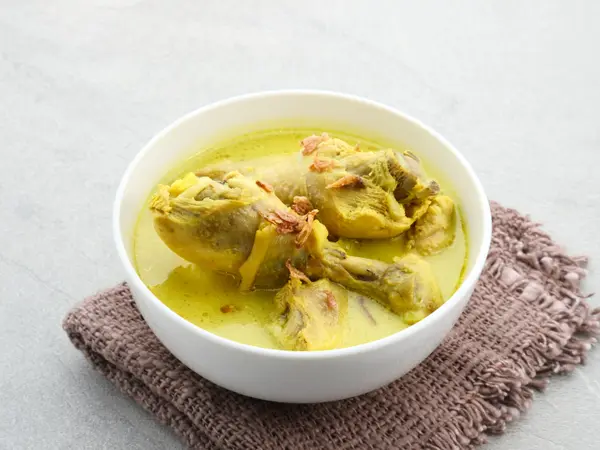
Opor Ayam
Indonesia's mild, golden chicken curry cooked in coconut milk with lemongrass, galangal and spices. A favorite for Eid feasts.
Gulai Ayam Padang
The yellow coconut chicken curry at the heart of every nasi Padang spread, rich with turmeric, galangal and lemongrass.
Nyonya Laksa
A rich, spicy coconut curry noodle soup with shrimp, tofu puffs and egg. The Peranakan laksa of Malacca.
Singapore Laksa
Singapore's creamy coconut curry laksa with short cut noodles you eat with just a spoon, topped with shrimp, cockles and laksa leaf.
Nasi Kandar
Penang's famous rice plate covered with a mix of rich curries, with fried chicken, egg and okra. This recipe makes the classic chicken curry and gravy.
Thai curries: green, red, panang and massaman
Thai curries (gaeng) begin with a fresh paste of chilies, lemongrass, galangal, garlic, shallots and makrut lime, fried in coconut cream until fragrant. Green curry, made with fresh green chilies, is usually the hottest. Red curry uses dried red chilies and is a little deeper and rounder.
Panang curry is thicker and sweeter, with peanuts in the paste and the meat cooked in just enough sauce to coat it. Massaman curry, shaped by Persian and Muslim traders, adds warm spices like cinnamon and cardamom, potatoes and roasted peanuts. In northern Thailand, khao soi serves curry as a coconut noodle soup topped with crispy noodles.
Thai Green Curry
Gaeng keow wan: chicken and Thai eggplant simmered in coconut milk with homemade green curry paste and basil.
Thai Red Curry
Rich Thai red curry with chicken, bamboo shoots, Thai basil and kaffir lime in coconut milk.
Panang Curry
Thailand's thick, rich and slightly sweet red curry of beef or chicken in reduced coconut cream, with peanuts in the paste and shredded makrut lime leaves on top.
Massaman Curry
Thailand's rich, mildly spiced curry with coconut milk, potatoes and roasted peanuts. Warm spices give it a gentle, fragrant depth.
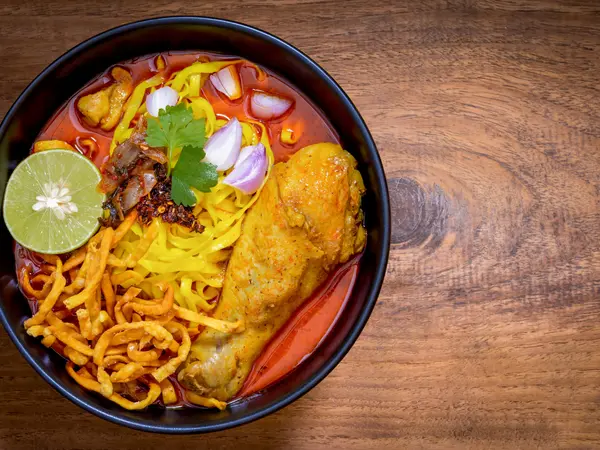
Khao Soi
Northern Thailand's curry noodle soup with chicken in a rich coconut and red curry broth, topped with crispy noodles and lime.
Myanmar, Vietnam, Cambodia, Sri Lanka and the Maldives
Burmese curries are cooked until the water is gone and the oil rises to the top, a style called see byan, with lots of onion, garlic and ginger instead of a long spice list. Vietnamese cà ri gà is soupy and fragrant with lemongrass and sweet potato, and you dip a baguette into it. Cambodia’s fish amok is a curry steamed into a soft custard.
Sri Lankan curries get their deep color from curry powder roasted until dark, with coconut milk and curry leaves. In the Maldives, mas riha is a tuna curry in coconut milk, eaten with rice or flatbread.
Burmese Chicken Curry
Myanmar's oil-rich chicken curry, slowly cooked with a lot of onion, garlic, ginger, turmeric and paprika until the oil rises to the top.
Cà Ri Gà
Vietnam's fragrant, soupy chicken curry with lemongrass, coconut milk, sweet potato and carrot, eaten with a crusty baguette or rice noodles.
Fish Amok
Cambodia's national dish: fish steamed in a silky coconut curry custard with kroeung paste, in banana-leaf cups.
Sri Lankan Chicken Curry
Kukul mas curry: chicken in a deep, dark roasted curry powder sauce with coconut milk, curry leaves and pandan.
Mas Riha
Maldivian tuna curry: cubes of fresh tuna in a coconut milk sauce with curry leaves, onion, garlic, ginger, chili and Maldivian spices.
India: korma, vindaloo, rogan josh and many more
India has more styles of curry than any list can hold, and most Indian cooks don’t call them curries at all: each dish has its own name. A few you’ll see everywhere:
Butter chicken, created in Delhi in the mid-1900s, is creamy, mild and tomato-rich. Korma comes from the Mughal kitchens, braised gently with yogurt, nuts and cardamom. Rogan josh is Kashmir’s red lamb curry, colored with mild Kashmiri chilies. Vindaloo, from Goa, takes its name from the Portuguese carne de vinha d’alhos, meat in wine and garlic, and is hot and tangy with vinegar.
The south has its own world of curries: coconut fish curries from Goa and Kerala, Goa’s dark roasted-coconut chicken xacuti, peppery Chettinad chicken from Tamil Nadu, and Rajasthan’s fiery laal maas. And the everyday curries of Indian homes are often lentils and beans, like dal tadka and rajma.
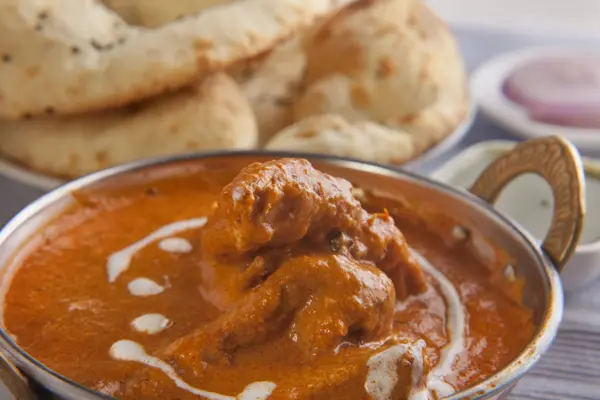
Butter Chicken
Tender chicken in a creamy, mildly spiced tomato and butter sauce. India's most-loved curry, made for naan and rice.
Chicken Korma
Mild Mughal chicken curry in a creamy yogurt, cashew and cardamom sauce.
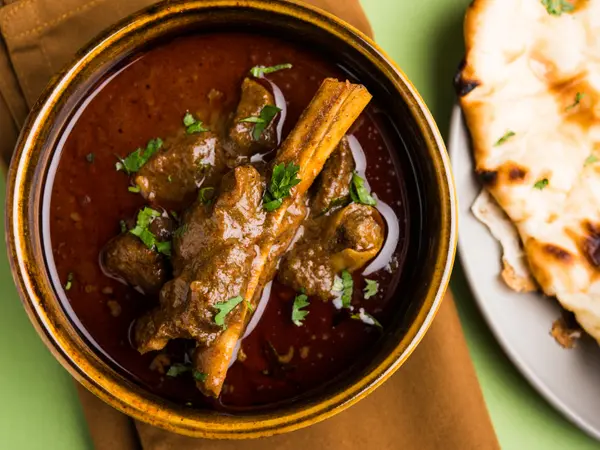
Rogan Josh
Kashmir's aromatic lamb curry, slow-cooked in yogurt with warming spices and Kashmiri chilies that give it a deep red color.
Chicken Vindaloo
Goan vindaloo: fiery, tangy curry with chilies, vinegar, garlic and warm spices.
Goan Fish Curry
Goa's everyday coconut fish curry, tangy with kokum or tamarind and bright red from Kashmiri chilies. Served with rice.
Kerala Fish Curry
Kochi's fiery, sour red fish curry cooked with kodampuli (fish tamarind) in a clay pot, getting better a day later.
Chicken Xacuti
Goa's complex chicken curry made with a dark paste of roasted coconut, poppy seeds, star anise and over a dozen spices.
Chettinad Chicken
A fiery Tamil Nadu chicken curry made with a freshly roasted paste of black pepper, fennel, coconut and dried red chilies.
Laal Maas
Rajasthan's fiery red mutton curry, colored and heated with Mathania chilies and cooked with yogurt, garlic and ghee.
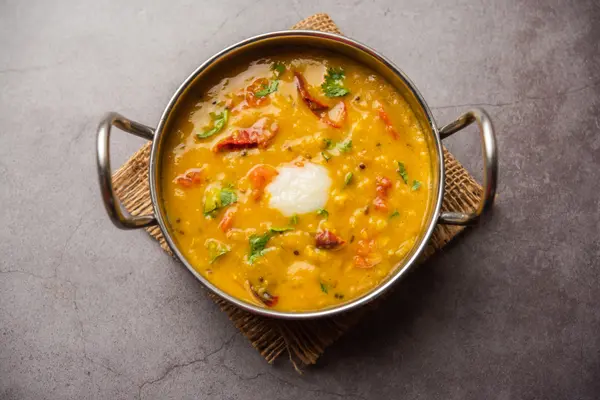
Dal Tadka
North India's everyday comfort dal: soft yellow lentils finished with a sizzling tempering of ghee, cumin, garlic and chilies.
Rajma
Punjabi red kidney beans simmered in a thick onion, tomato and garam masala gravy, eaten with rice.
Pakistan and Bangladesh
Pakistan’s chicken karahi is cooked fast and hot in a wok-like pan with tomatoes, ginger and green chilies. Jalfrezi is a stir-fried curry with peppers and onions. Bangladesh is a country of rivers and fish: macher jhol is a light everyday fish curry, shorshe ilish cooks hilsa in a sharp mustard sauce, and chingri malai curry is prawns in coconut milk.
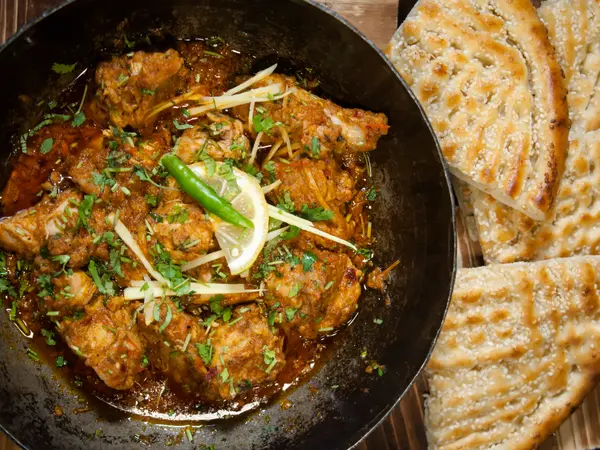
Chicken Karahi
Pakistan's famous karahi: chicken cooked fast in a wok-like pan with tomatoes, ginger, garlic and green chilies.
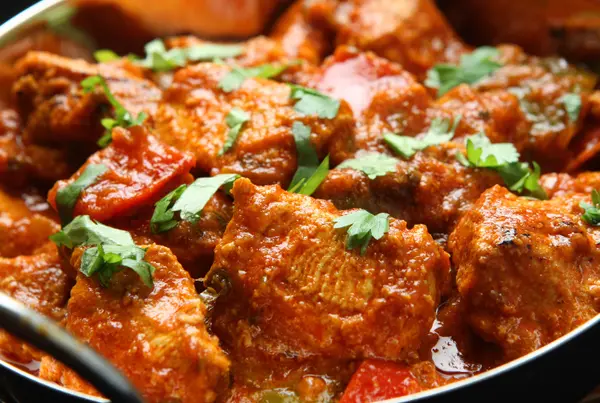
Jalfrezi
A spicy stir-fried curry of beef or chicken with peppers, onions and tomatoes in a thick sauce. Quick and colorful.
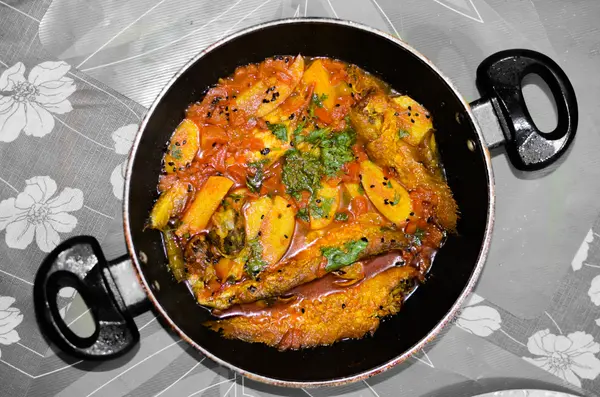
Macher Jhol
Bengal's light everyday fish curry with potatoes, simmered with turmeric, garlic, ginger and onions. Serve with plain rice.
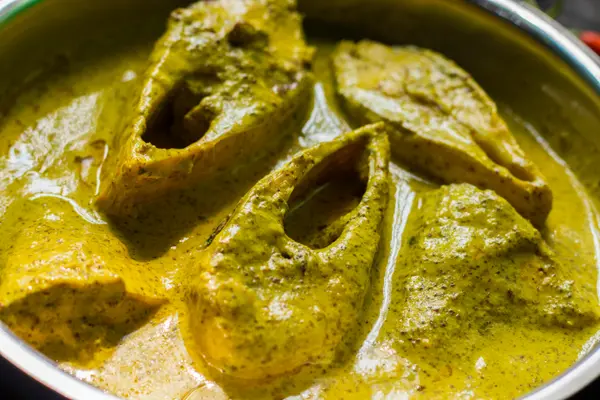
Hilsa Curry/Shorshe Ilish
Hilsa fish cooked in a mustard and coconut sauce.
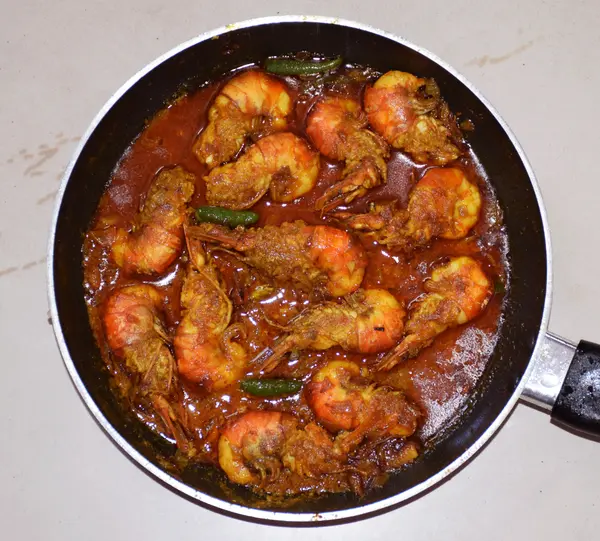
Chingri Malai Curry
Bengal's creamy prawn curry cooked in coconut milk with warm spices. Serve with rice.
Britain and Germany
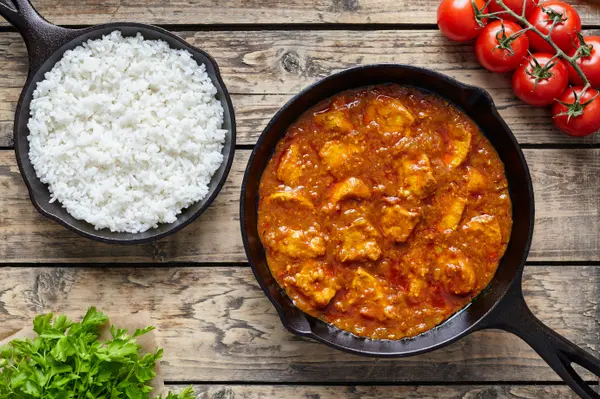
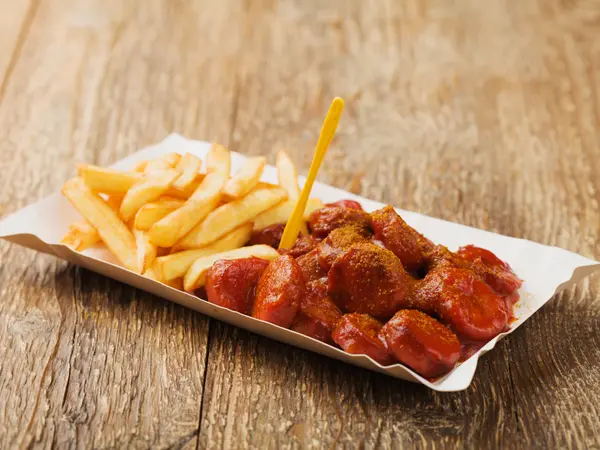
Curry has been on British menus for more than 200 years. Chicken tikka masala, usually credited to a Glasgow restaurant in the 1970s, was famously called “a true British national dish” by a foreign secretary in 2001. In Berlin, currywurst, sliced sausage in a curry ketchup, has been street food since 1949.
The Caribbean and South America
Curry reached the Caribbean with the Indian workers who arrived from 1845. Jamaican curry goat and Trinidad curry chicken both start by frying the curry powder in hot oil until it darkens, and they’re eaten with rice or roti. In Guadeloupe and Martinique, colombo is made with a spice blend named after the city in Sri Lanka, and in Suriname, roti kip is chicken masala curry with potatoes and long beans, wrapped in roti.
Curry Goat
Jamaican curry goat slow-cooked with curry powder, thyme, allspice and scotch bonnet until falling off the bone.
Trinidad Curry Chicken
Trinidad and Tobago's Sunday curry: chicken marinated in green seasoning, then cooked in toasted curry powder with potatoes until the sauce is thick, served with roti or rice.
Colombo de Poulet
The French Caribbean curry: chicken marinated in lime and garlic, then stewed with colombo spice, eggplant, christophine and potato.
Colombo de Porc
Martinique pork colombo: pork shoulder marinated in lime and garlic and stewed with colombo spice, mango, eggplant and christophine.
Roti Kip
Surinamese chicken masala curry with potatoes, long beans and boiled eggs, served with soft split-pea roti. A Hindustani-Surinamese favourite.
Africa, the Indian Ocean and the Pacific
Durban, in South Africa, has one of the largest Indian communities outside Asia, and its curries are famously red and fiery. Bunny chow, a hollowed-out loaf filled with curry, was born there. On Réunion and the Seychelles, cari and kari are everyday island curries of chicken and fish. Fiji’s Indian community made dhal a national favorite, and in New Caledonia, cari de cerf is curry made with wild venison.
Durban Lamb Curry
Durban's fiery red Indian-South African curry of lamb and potatoes, cooked with "Durban masala" and curry leaves.
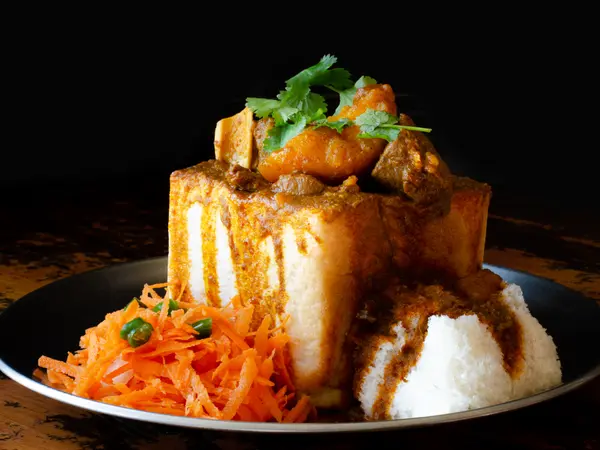
Bunny Chow
Durban's famous street food: a hollowed-out loaf of white bread filled with spicy curry, with the scooped-out bread on top for mopping up the sauce.
South African Bean Curry
A Durban-style curry of sugar beans with onion, tomato, ginger and masala.
Cari Poulet
Réunion Island's everyday chicken curry: bone-in chicken browned, then braised with onion, tomato, garlic, ginger, thyme and turmeric. Served with rice and beans.
Kari Koko Pwason
Seychelles fish curry: chunks of red snapper or tuna in a creamy coconut sauce with curry powder, ginger, garlic and fresh thyme.
Fijian Dhal
Fiji Indian yellow split pea dhal tempered with garlic, cumin, mustard seed and curry leaves.
Cari de Cerf
New Caledonia's venison curry: wild deer braised with tomatoes, onion, garlic, ginger, turmeric and thyme.
Frequently asked questions
What are the main types of curry?
The best-known families are Indian curries (like korma, vindaloo, rogan josh and butter chicken), Thai curries (green, red, panang and massaman), Japanese curry, Southeast Asian curries like rendang and laksa, and Caribbean curries like curry goat and Trinidad curry chicken.
How is Japanese curry different from Indian curry?
Japanese curry came to Japan from Britain, so it is thickened with a butter and flour roux and seasoned with curry powder. It is milder and slightly sweet, usually with chicken, potato and carrot, and served over short-grain rice. Indian curries are built from whole and ground spices cooked in oil or ghee, and vary hugely from region to region.
Is rendang a curry?
Yes. Rendang is often called a dry curry: beef is cooked in coconut milk and a spice paste until the liquid has gone and the paste coats the meat. The wetter stage before that is called kalio.
What is the mildest type of curry?
Korma, butter chicken, Japanese curry, massaman curry and Indonesian opor ayam are all mild and creamy. They are a good start for children or anyone new to curry.
What is the hottest type of curry?
Vindaloo, Rajasthani laal maas, Thai green curry, Kerala fish curry and Durban curries are among the hottest. You can always use fewer chilies at home.
What is the difference between Thai red and green curry?
Green curry paste is made with fresh green chilies and is usually hotter and brighter. Red curry paste uses dried red chilies, which give a deeper, rounder flavor.
Keep exploring
More from Food around the world
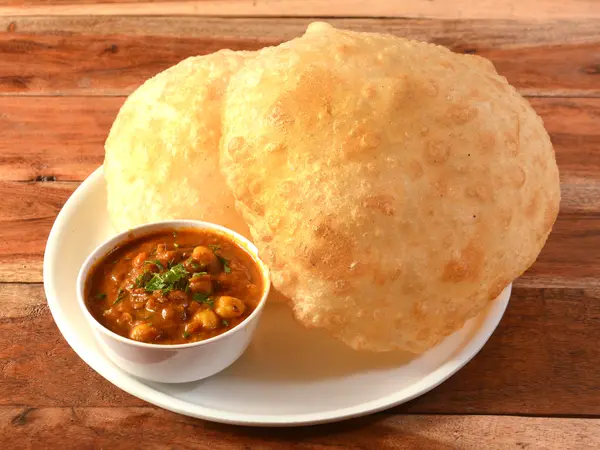 Indian food: a guide to the dishes, region by regionA guide to traditional Indian food, region by region: Punjabi curries and breads, South Indian dosa and sambar, Mumbai street food, Bengali sweets and more, with recipes.
 Comfort food from around the worldComfort food from around the world: soups and porridges, rice and lentil dishes, potato bakes and puddings that feel like home in every culture.
 Food from around the world: 50 dishes to tryFood from around the world, continent by continent: 50 of the best-loved dishes from Asia, the Middle East, Europe, Africa, the Americas and Oceania, with recipes.