
Korean recipe
Kimchi
Korea's famous spicy fermented napa cabbage with chili, garlic, ginger and green onions. Eaten with every meal.
- Prep
- 1 hr
- Salt & ferment
- 1 day 2 hr
- Total
- 1 day 3 hr
- Servings
- 5
- Difficulty
- Intermediate
- Course
- Side Dish
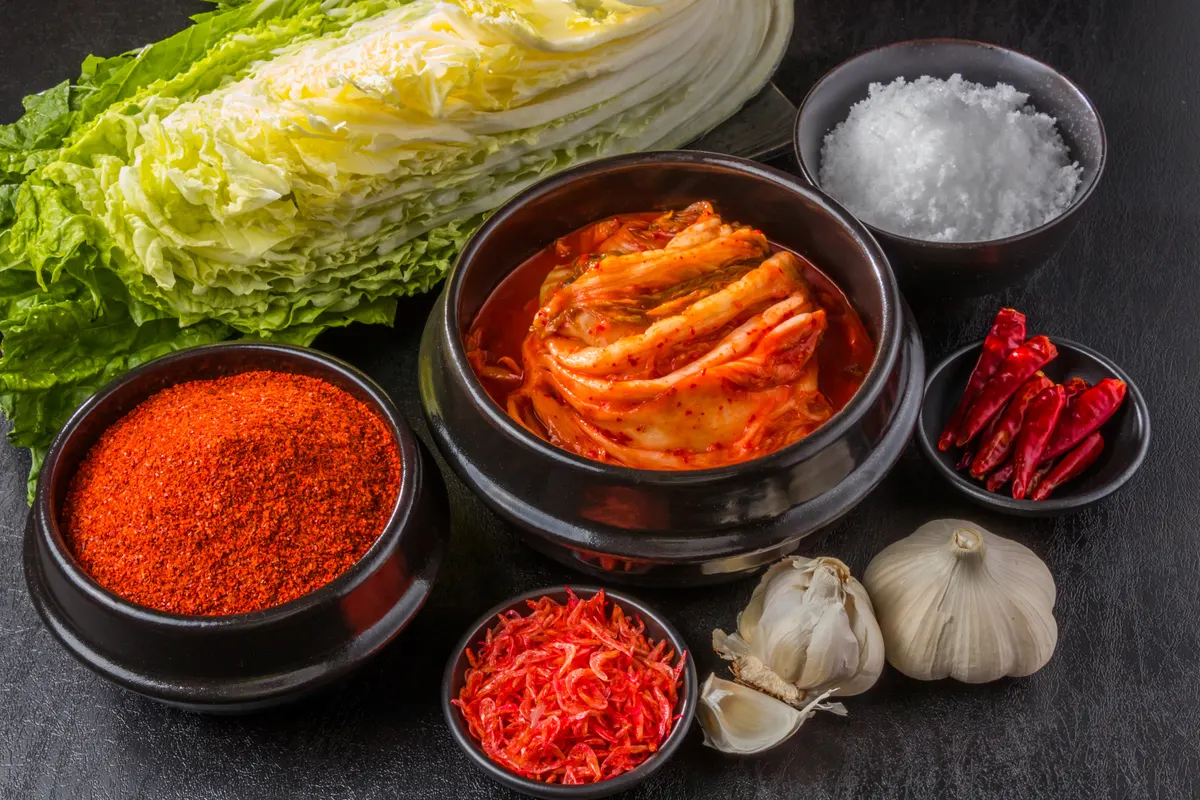
About this dish
A delicious, tangy mixture of fermented cabbage and vegetables, kimchi is a staple of Korean cuisine. The perfect balance of spice and flavor make this side-dish a favorite among all who try it.
Instructions
Cut the cabbage lengthwise into quarters. Rinse, then sprinkle the salt between every leaf, using more near the thick stems.
Leave for 2 hours, turning every 30 minutes, until the stems bend without snapping. Rinse three times in cold water and drain cut side down for 20 minutes.
Meanwhile, cook the rice flour and water in a small pan, stirring, for 3 to 4 minutes until it turns into a thin paste. Stir in the sugar and let cool.
Mix the cooled paste with the gochugaru, fish sauce, garlic, ginger and onion, then fold in the radish and green onions.
Wearing gloves, spread the paste between every leaf of each cabbage quarter. Fold each quarter in half and pack tightly into a clean jar, leaving 1 inch (2.5 cm) of space at the top.
Leave at room temperature for 1 to 2 days until it smells sour and bubbles appear, pressing it down each day. Then refrigerate; it is good after 1 week and keeps for months.
Cooking tips
Taste a leaf after the salting step: it should be pleasantly salty, not harsh. For a vegan kimchi, use 3 tablespoons soy sauce in place of the fish sauce.
Dietitian’s notes
Suitable for: diabetes, gestational diabetes, pregnancy, anti-inflammatory
- One portion
- 1 small dish
- If you are closely watching your blood sugar, use less sweet rice flour or leave it out.
- The chili and acidity can trigger reflux or heartburn.
- For gluten-free, use the sweet rice flour, not all-purpose flour.
- Very high in sodium. Contains fish (fish sauce).
For diabetics:
- If you have diabetic kidney disease (nephropathy), watch your sodium, potassium and phosphorus intake.
- If you have heart disease, watch your sodium and saturated fat intake.
- If you have high blood pressure, watch your sodium intake.
- If you have liver disease, watch your fat intake.
- If you have thyroid disease, watch your iodine intake.
Reviewed by Dr. Sehrish Nasreen, DHND, November 2026.
Nutrition per serving
- 155kcal
- Calories
- 7g
- Protein
- 26g
- Carbs
- 3g
- Fat
- 8g
- Fiber
- <1g
- Saturated fat
Estimated values.
Frequently asked questions
Where does Kimchi come from?
Kimchi is a dish from South Korea. Korea's famous spicy fermented napa cabbage with chili, garlic, ginger and green onions. Eaten with every meal.
How long does it take to make Kimchi?
About 1 day 3 hr in total: 1 hr of prep and 1 day 2 hr of hands-off waiting time. The recipe serves 5.
You might also like
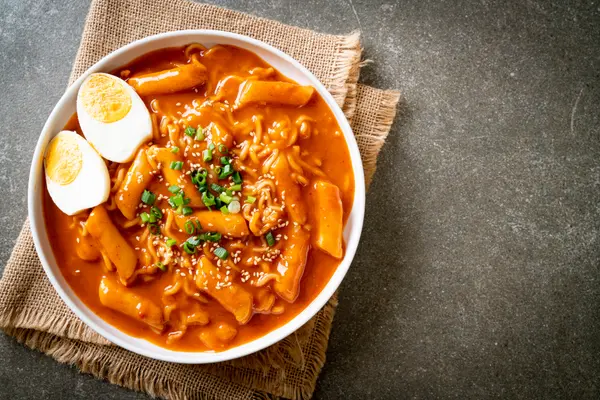
Tteokbokki
Korea's chewy rice cakes simmered in a sweet and spicy gochujang sauce. A favorite street snack, ready in under half an hour.
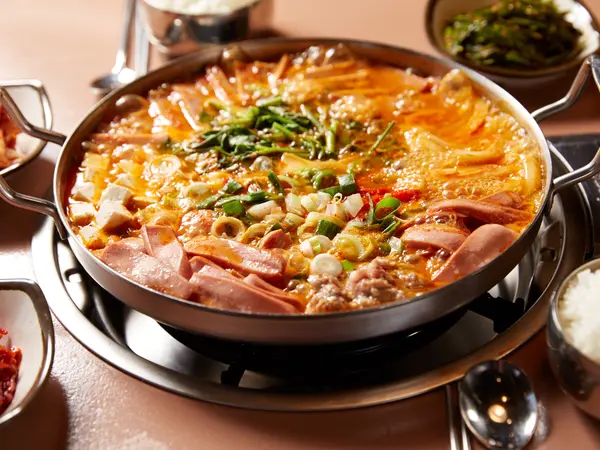
Budae Jjigae
Spicy Korean army stew of Spam, kimchi, tofu and ramen noodles in a gochujang broth.
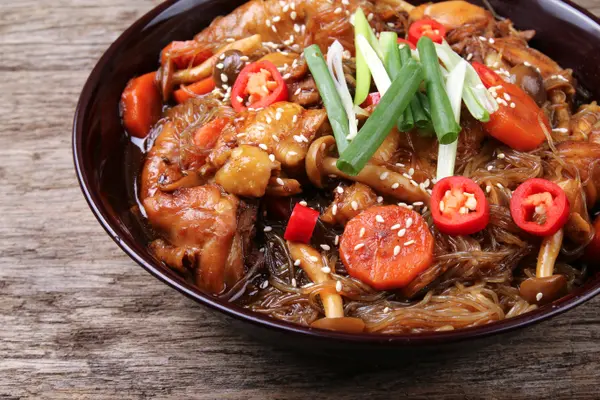
Andong Chicken
A Korean braise of chicken legs simmered in a sweet, spicy sauce of soy, honey, ginger and gochujang. A favorite from Andong.
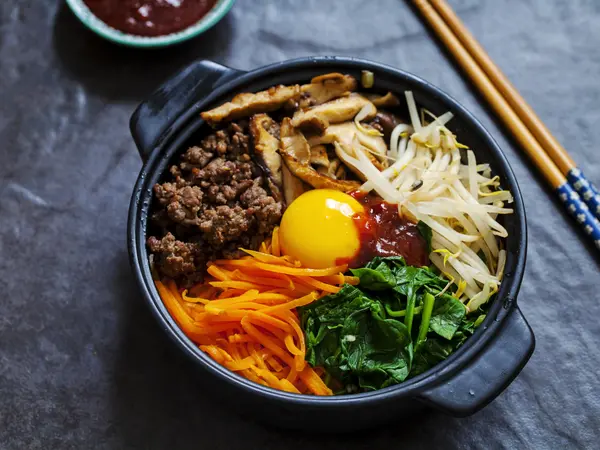
Bibimbap
Warm white rice topped with namul or kimchi and gochujang, soy sauce or doenjang with meat and vegetables
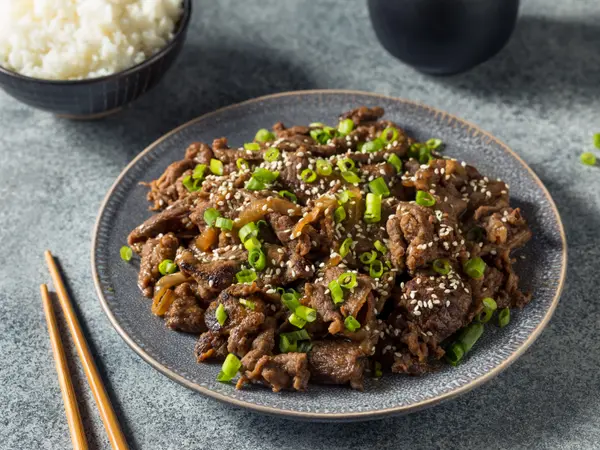
Bulgogi
Thin slices of beef marinated in soy sauce, sesame and garlic, then grilled.
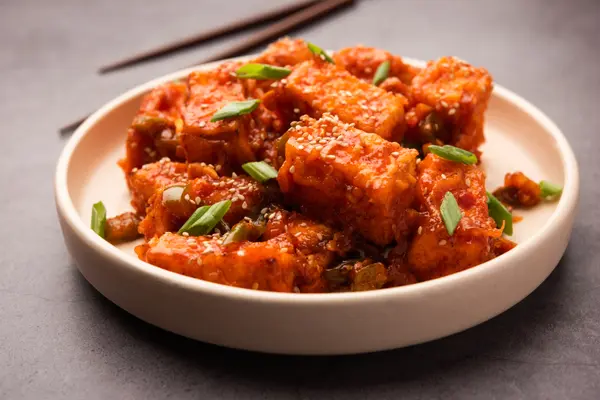
Chilli Paneer
Golden paneer cubes in a tangy, lightly sweet tomato sauce with onion, ginger, garlic and green chili. A quick, crowd-pleasing side.
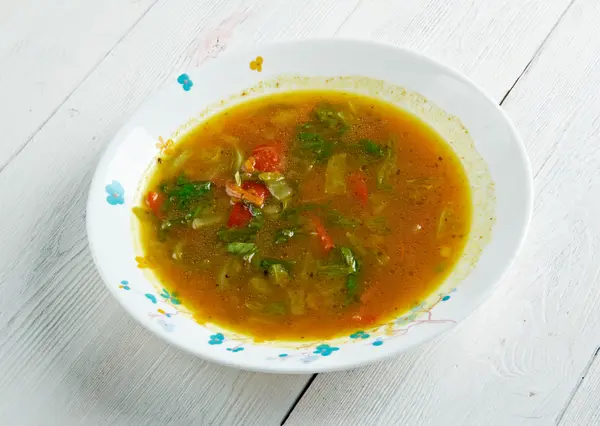
Ema Datshi
Bhutan's national dish of chilies cooked in a melting cheese sauce with onion, garlic and ginger. Fiery and comforting.
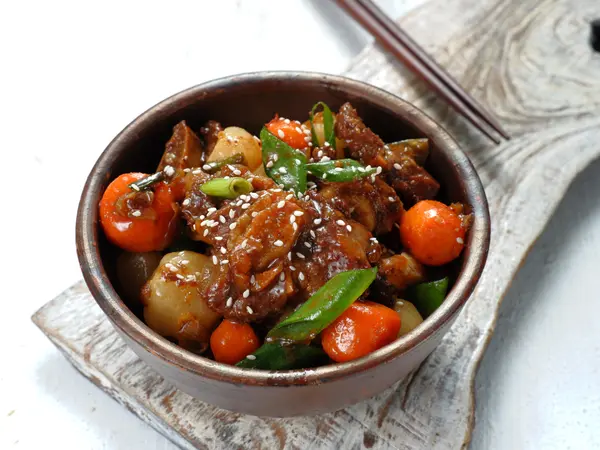
Galbi Jjim
Korea's festive braised beef short ribs in a sweet soy sauce with garlic and vegetables, cooked until falling off the bone.