
Japanese recipe
Tamagoyaki
A sweet-savory Japanese rolled omelette made in layers with dashi, soy sauce and mirin.
- Prep
- 5 min
- Cook
- 10 min
- Total
- 15 min
- Servings
- 2
- Difficulty
- Intermediate
- Course
- Breakfast
About this dish
Tamagoyaki is in Japanese breakfast trays, bento boxes and sushi bars. Thin layers of seasoned egg are rolled up one after another in a rectangular pan, giving a tender, layered log that slices neatly. You can make it in a round pan too and trim the sides.
Instructions
Beat the eggs gently with the dashi, soy sauce, mirin and salt, without making foam.
Heat a tamagoyaki pan or small nonstick pan over medium heat and wipe with an oiled paper towel.
Pour in a thin layer of egg and tilt to cover. When it is almost set, roll it from the far end toward you.
Push the roll back to the far end, oil the pan again and pour in another thin layer, lifting the roll so egg runs under it.
When set, roll back toward you. Repeat until all the egg is used.
Tip onto a bamboo mat or paper towel, shape into a neat block and rest 5 minutes. Slice.
Cooking tips
Keep the heat moderate; brown spots are fine but the egg should stay soft. Many families add 1 to 2 teaspoons sugar for a sweeter version.
Storage
Keeps 2 days in the fridge; good cold in a lunch box.
Dietitian’s notes
Suitable for: diabetes, gestational diabetes, anti-inflammatory, GERD, heartburn
- Diabetic plans
- Half of the rolled omelette
- The dashi and soy sauce add sodium: go easy on a heart-healthy, DASH or low-sodium diet.
- Eggs bring phosphorus and protein, so it is not for a strict kidney (renal) diet.
For diabetics:
- If you have diabetic kidney disease (nephropathy), watch your sodium, potassium and phosphorus intake.
- If you have heart disease, watch your sodium and saturated fat intake.
- If you have high blood pressure, watch your sodium intake.
- If you have liver disease, watch your fat intake.
- If you have thyroid disease, watch your iodine intake.
Reviewed by Dr. Sehrish Nasreen, DHND, November 2026.
Nutrition per serving
- 215kcal
- Calories
- 13g
- Protein
- 2g
- Carbs
- 17g
- Fat
- 0g
- Fiber
- 4g
- Saturated fat
Estimated values.
Frequently asked questions
Where does Tamagoyaki come from?
Tamagoyaki is a dish from Japan. A sweet-savory Japanese rolled omelette made in layers with dashi, soy sauce and mirin.
How long does it take to make Tamagoyaki?
About 15 min in total: 5 min of prep and 10 min of cooking. The recipe serves 2.
Is Tamagoyaki lactose free or nut free?
Yes. As written, this recipe is lactose free, nut free, keto and low carb. If you cook for allergies, check the labels on stocks, sauces and spice blends.
Can I make Tamagoyaki ahead or store leftovers?
Keeps 2 days in the fridge; good cold in a lunch box.
You might also like
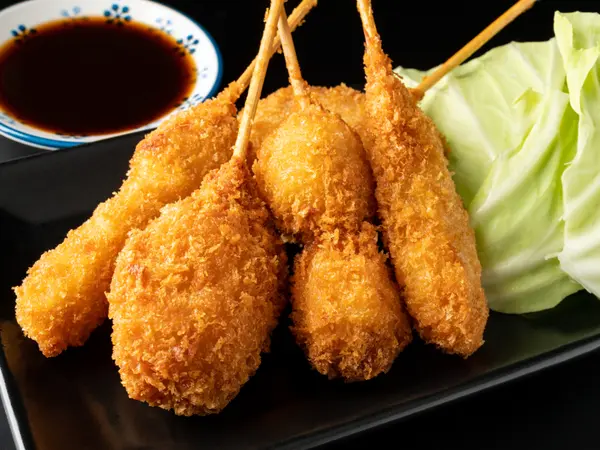
Kushikatsu
Osaka-style skewers of pork, onion, mushroom and pepper, coated in crisp panko and deep-fried. Dip them in tangy katsu sauce, just once.
Dorayaki
Japanese pancake sandwiches: two fluffy honey pancakes pressed together around a sweet red bean filling. A favorite snack with green tea.

Karaage
Bite-size chicken marinated in soy, sake and ginger, coated in flour and starch and deep fried.
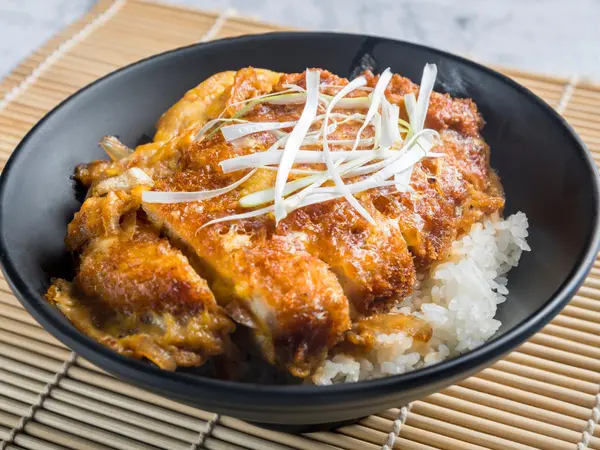
Katsu
Deep fried crispy, crunchy panko breaded chicken

Katsudon
Japan's comforting rice bowl: crisp pork cutlet simmered with onion and egg in a sweet soy sauce, served over rice.
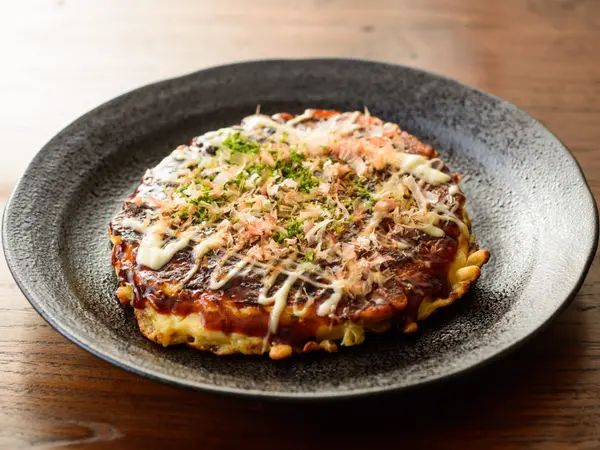
Okonomiyaki
Japan's savory cabbage pancake, packed with cabbage and your choice of pork or seafood, topped with tangy sauce, mayo and bonito flakes.
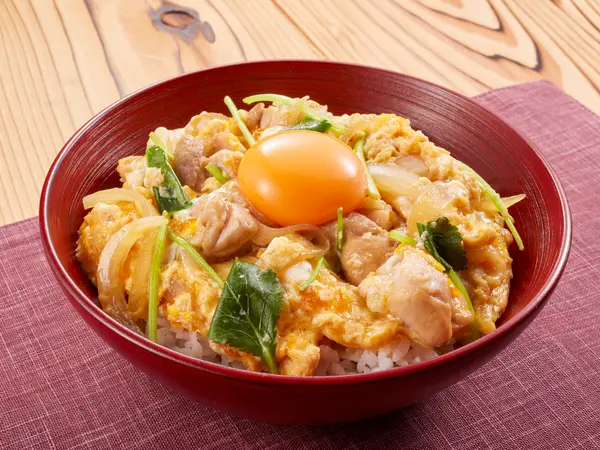
Oyakodon
Japan's comforting chicken and egg rice bowl, simmered in a sweet soy and dashi sauce with onion.

Takoyaki
Osaka's famous street snack: crisp little batter balls with tender octopus inside, topped with tangy sauce, mayo and green onions.