
Ethiopian recipe from Addis Ababa
Injera
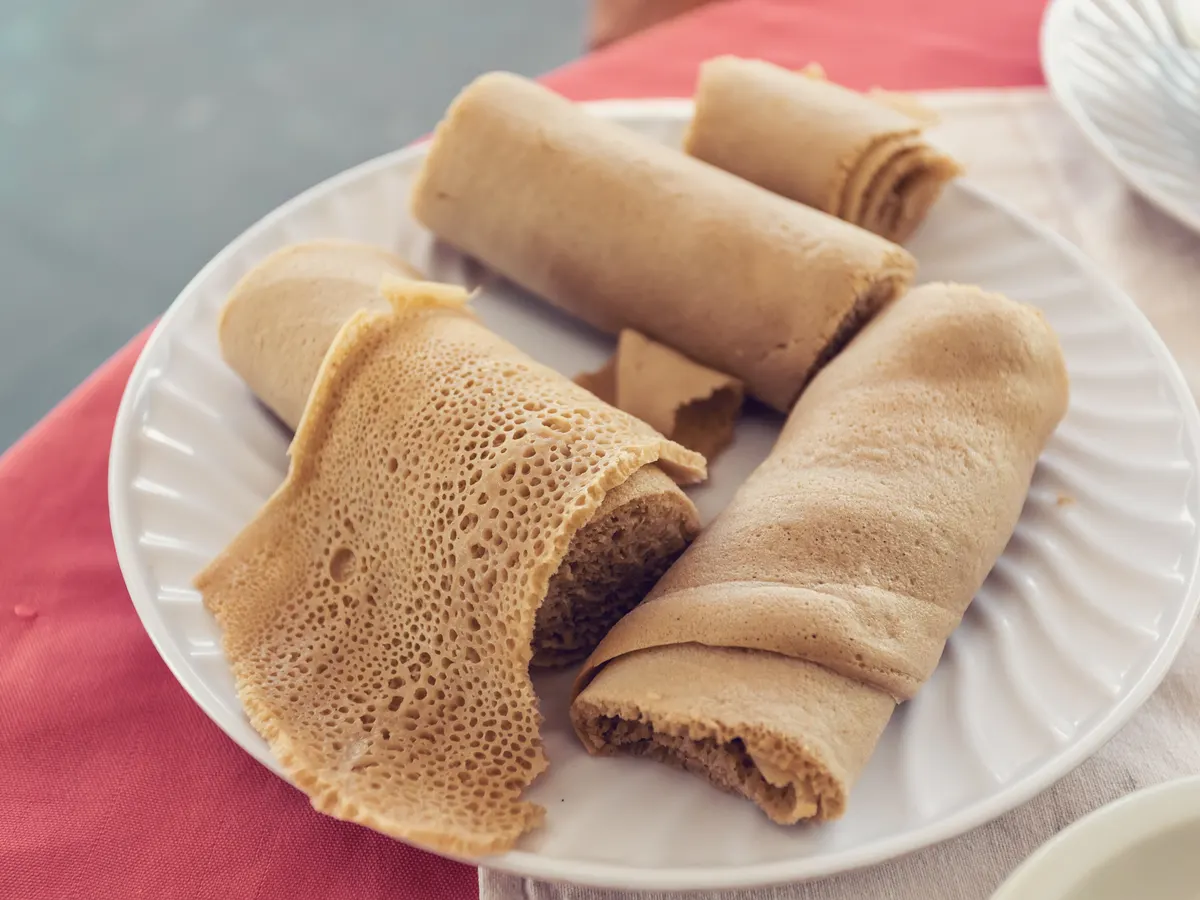
Spongy, sour Ethiopian and Eritrean flatbread made from fermented teff batter and cooked on one side only.
- Prep
- 15 min
- Cook
- 40 min
- Total
- 48 hr 55 min
- Servings
- 10 injera
- Difficulty
- Intermediate
- Course
- Dinner
About this dish
Injera is plate, spoon and bread at an Ethiopian or Eritrean meal: stews are spooned onto a big round of it, and you tear off pieces to scoop them up. It is made from teff, a tiny grain that is naturally gluten free, and the batter ferments for two or three days, which gives injera its sour tang and the little holes, or eyes, all over the top. It is cooked on one side only and never flipped.
Instructions
Whisk the teff flour with 3 cups (720 ml) of the water in a large glass or plastic bowl until smooth. Cover loosely with a clean cloth and leave at room temperature for 2 to 3 days. It is ready when it is bubbly, smells pleasantly sour and a layer of liquid has risen to the top.
Pour off most of the liquid on top. Stir in the salt and enough of the remaining water to make a thin batter, about like crêpe batter.
Heat a large nonstick skillet or a mitad over medium heat. Wipe it with a very little oil, or none at all if it is truly nonstick.
Pour about 1/2 cup (120 ml) of batter in a spiral from the outside edge to the middle so it covers the pan in a thin layer. Do not spread it with a spoon.
Cook until holes appear all over the surface and the top looks dry, about 1 to 2 minutes, then cover the pan for 30 seconds to steam it through. Do not flip it.
Slide the injera onto a clean cloth to cool, and don't stack them until they are cool or they will stick. Repeat with the rest of the batter.
Cooking tips
In a cool kitchen the batter may need an extra day; an oven with only the light on is a good warm spot. Many injera sold in the US is made with some wheat or barley flour, which is not gluten free. This one is 100% teff.
Storage
Keeps 2 days wrapped at room temperature, or a week in the fridge.
Dietitian’s notes
Suitable for: diabetes, gestational diabetes, pregnancy, anti-inflammatory, gout, GERD, heartburn, anemia
- One portion
- 1 injera
For diabetics:
- If you have diabetic kidney disease (nephropathy), watch your sodium, potassium and phosphorus intake.
- If you have heart disease, watch your sodium and saturated fat intake.
- If you have high blood pressure, watch your sodium intake.
- If you have liver disease, watch your fat intake.
- If you have thyroid disease, watch your iodine intake.
Reviewed by Dr. Sehrish Nasreen, DHND, October 2026.
Nutrition per serving
- 140kcal
- Calories
- 5g
- Protein
- 25g
- Carbs
- <1g
- Fat
- 3g
- Fiber
- 0g
- Saturated fat
- 120mg
- Sodium
Estimated values.
Frequently asked questions
Where does Injera come from?
Injera is a dish from Ethiopia. Spongy, sour Ethiopian and Eritrean flatbread made from fermented teff batter and cooked on one side only.
How long does it take to make Injera?
About 2 days in total. The recipe serves 10 injera.
Is Injera vegan or vegetarian?
Yes. As written, this recipe is vegan, vegetarian, gluten free, lactose free and nut free. If you cook for allergies, check the labels on stocks, sauces and spice blends.
Can I make Injera ahead or store leftovers?
Keeps 2 days wrapped at room temperature, or a week in the fridge.
You might also like
Doro Wot
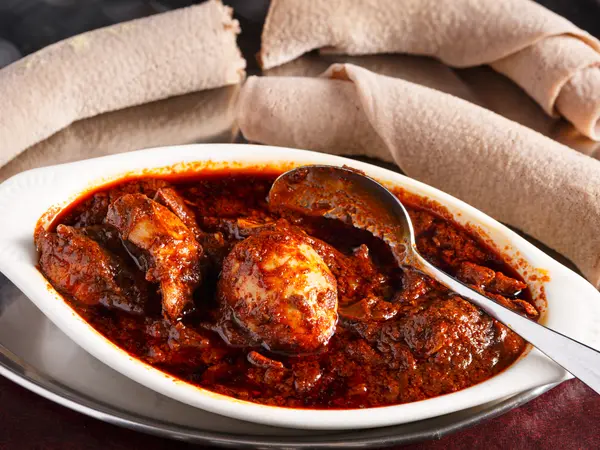
Ethiopia's celebration chicken stew: onions cooked down slowly with niter kibbeh and berbere, with whole hard-boiled eggs.
Alicha
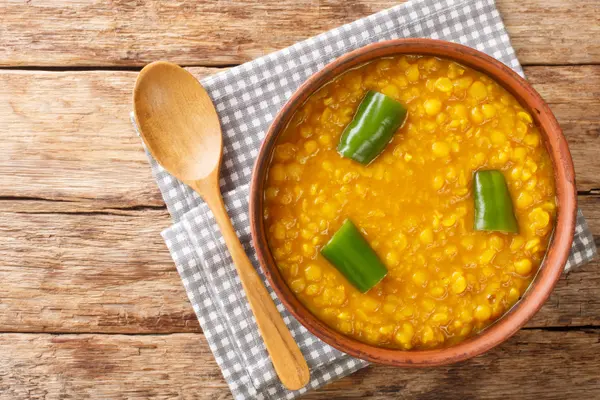
A gentle Ethiopian vegetable stew of potatoes, carrots and peppers cooked with onion, garlic, ginger and turmeric. Mild, golden and great with injera.
Chicken Muamba
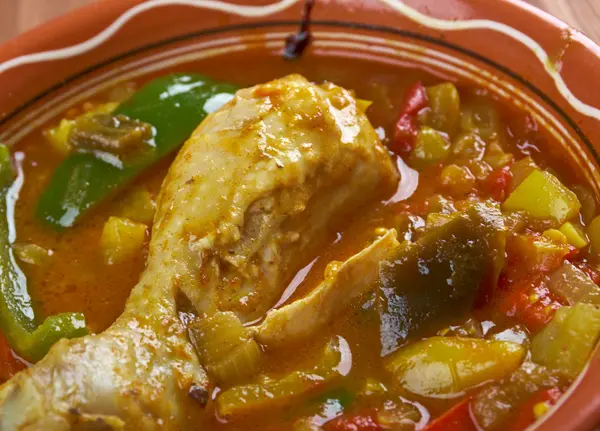
Angola's national chicken stew, cooked in red palm oil with okra, squash, garlic and chili.
Kitfo
Ethiopian minced beef warmed in spiced butter with mitmita, served with ayib cheese, greens and injera.
Misir Wot
Spicy Ethiopian red lentil stew with onions, garlic, ginger and berbere, eaten with injera.
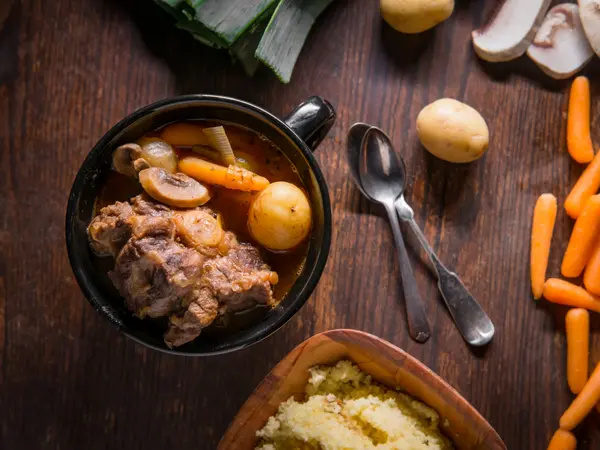
Oxtail Potjie
South African oxtail stewed slowly in a cast-iron potjie with carrots, celery and herbs until the meat falls off the bone.
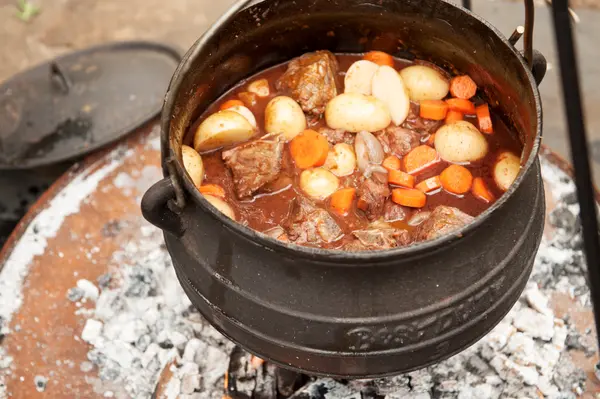
Potjiekos
South Africa's slow-cooked one-pot stew of beef, potatoes, carrots, peppers and mushrooms, layered in a cast-iron potjie over the fire.
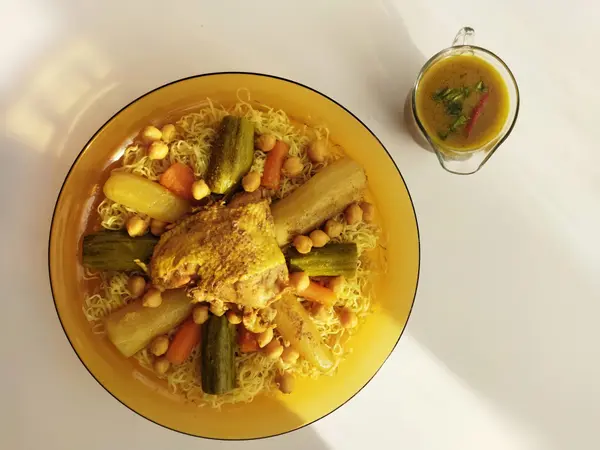
Rechta
Algeria's thin, flat hand-cut noodles, steamed and served with a white chicken, chickpea and turnip broth scented with cinnamon.