
Papua New Guinean recipe from Port Moresby
Mumu
Papua New Guinea's earth-oven feast: pork, sweet potato, taro, banana and greens steamed for hours on hot stones under banana leaves.
- Prep
- 40 min
- Cook
- 3 hr 30 min
- Total
- 4 hr 10 min
- Servings
- 8
- Difficulty
- Intermediate
- Course
- Dinner
About this dish
A mumu is both the meal and the oven. Stones are heated in a big fire, then laid in a pit and covered with banana leaves, and pork, kaukau (sweet potato), taro, cooking bananas and greens are packed in layers on top. More leaves and earth seal it, and the food steams slowly in its own juices for two or three hours. Mumus are cooked for weddings, bride-price ceremonies, funerals, church days and any big village gathering, and opening one is a moment everyone gathers round for. On the coast and islands, coconut cream is often poured over the food before the pit is closed. This version layers the same foods in a covered roasting pan in the oven, with directions for a real pit at the end.
Instructions
Heat the oven to 325°F (160°C). Rub the pork all over with the salt.
Wave the banana leaves briefly over a gas flame or dip them in hot water so they soften and don't tear. Line a large, deep roasting pan with them, letting plenty hang over the sides.
Lay the sweet potato, taro and banana on the leaves in a single layer. Put the pork on top, then the pumpkin, ginger and green onion, and finish with the greens.
Mix the coconut cream with the water and a pinch of salt and pour it over everything.
Fold the overhanging leaves over the food, add more leaves on top, then seal the pan tightly with foil so no steam escapes.
Cook for 3 to 3 1/2 hours, until the pork pulls apart and the taro is soft all the way through. Leave sealed for 10 minutes before opening.
Open at the table and serve the meat, roots, bananas and greens together, spooning over the coconut juices from the bottom of the pan.
Cooking tips
In a real mumu, heat about 30 smooth river stones (not stones from a stream bed that could hold water and crack) in a hardwood fire for 1 to 2 hours. Dig a pit, lay in half the hot stones, cover with a thick layer of banana leaves, add the food in layers with some hot stones between, cover with more leaves, sprinkle a little water to make steam, then seal with sacks and earth. Cook 2 to 3 hours. In the Highlands, mumu is usually cooked without coconut. Taro must be cooked through: raw or underdone taro makes the mouth itch.
Storage
Keeps 3 days in the fridge. Reheat covered with a splash of water.
Frequently asked questions
Where does Mumu come from?
Mumu is a dish from Papua New Guinea. Papua New Guinea's earth-oven feast: pork, sweet potato, taro, banana and greens steamed for hours on hot stones under banana leaves.
How long does it take to make Mumu?
About 4 hr 10 min in total: 40 min of prep and 3 hr 30 min of cooking. The recipe serves 8.
Is Mumu gluten free or lactose free?
Yes. As written, this recipe is gluten free, lactose free, nut free and high protein. If you cook for allergies, check the labels on stocks, sauces and spice blends.
Can I make Mumu ahead or store leftovers?
Keeps 3 days in the fridge. Reheat covered with a splash of water.
You might also like
Chicken Pot
Everyday Papua New Guinean chicken stew simmered in coconut milk with sweet potato, pumpkin and greens.
Fish Cooked in Banana Leaves
Coastal Papua New Guinean whole fish wrapped in banana leaves with coconut cream, ginger and greens, and cooked over hot coals.

Bangers and Mash
Juicy sausages with creamy mashed potato and a rich onion gravy. Simple, hearty pub comfort food.
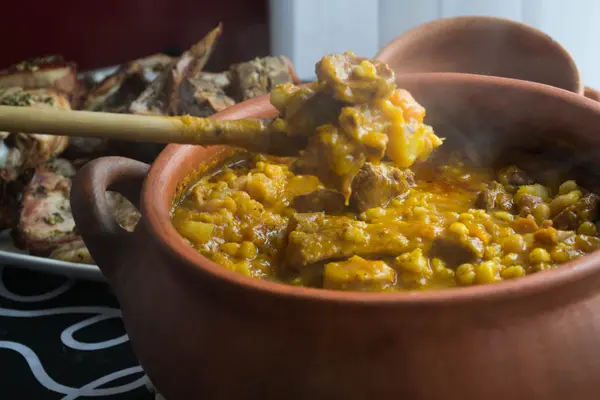
Locro
Argentina's national stew: white corn, beans, squash and pork slow-cooked until thick, finished with a red paprika-chili oil.
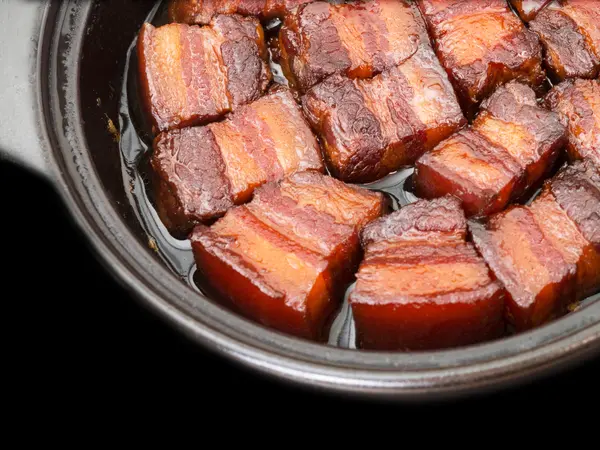
Red-Braised Pork
Pork belly cooked in ginger, garlic, spices, chilli peppers, sugar and soy sauce
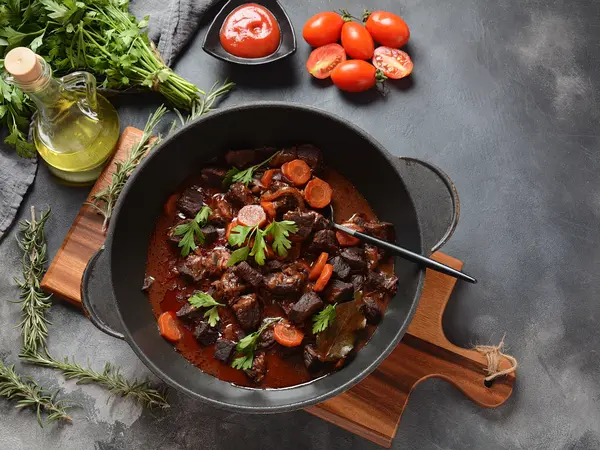
Bœuf Bourguignon
France's classic Burgundy beef stew: chunks of beef braised slowly in red wine with bacon, carrots, onions and mushrooms until fork-tender.
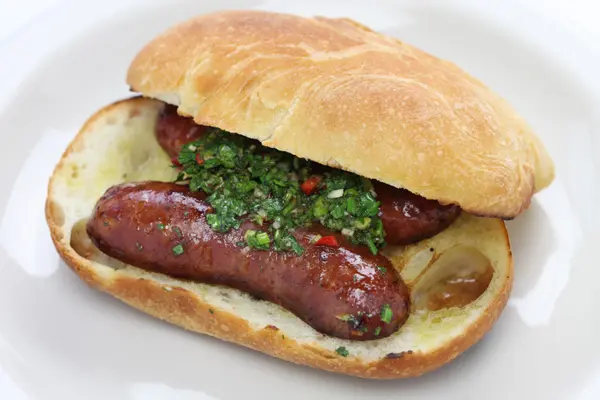
Chorizo con Pan
Grilled chorizo in a crusty roll with chimichurri and salsa criolla.
Curanto
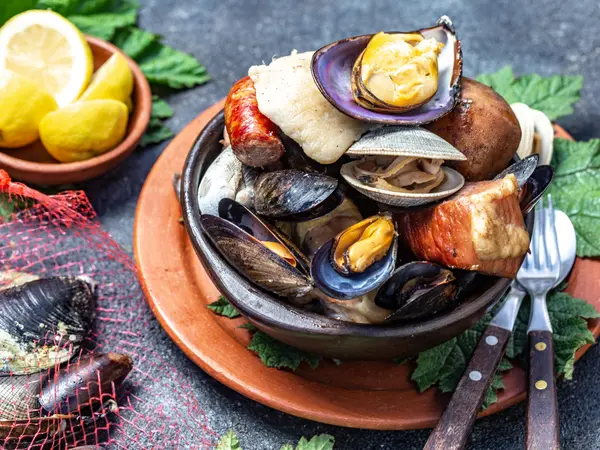
A feast from Chiloé in southern Chile: clams, mussels, chicken, smoked pork, sausages and potatoes steamed together in one big pot.