
Kazakh recipe
Beshbarmak
Kazakhstan's national dish: tender boiled lamb served over sheets of homemade dough with potatoes, carrots and onion sauce.
- Prep
- 20 min
- Cook
- 3 hr
- Total
- 3 hr 20 min
- Servings
- 4
- Difficulty
- Advanced
- Course
- Dinner
About this dish
Beshbarmak is the national dish of Kazakhstan, a hearty and traditional meal featuring boiled meat, pasta, and served with flavorful broth and condiments. The name "Beshbarmak" means "five fingers" in Kazakh, as it is traditionally eaten with one's hands. This recipe is typically made with lamb, but you can use other meats like beef or poultry if you prefer.
Instructions
Place the lamb chunks, halved onions, and whole garlic cloves in a large pot.
Cover with water, season with salt and black pepper, and bring to a boil.
Reduce the heat, cover, and simmer for about 2 hours or until the meat is tender. Skim off any impurities that rise to the surface during cooking.
In a mixing bowl, combine the all-purpose flour and eggs.
Gradually add water and knead until you have a smooth and elastic dough. The dough should be soft but not sticky.
Divide the dough into small portions and roll them into thin sheets.
Cut the sheets into diamond or square shapes.
Add the prepared dough pieces to the simmering meat and broth.
Cook until the dough pieces rise to the surface, indicating they are done. This should take about 10-15 minutes.
In a separate pot, bring water to a boil, then add the potato and carrot chunks. Cook until they are tender.
In a pan, sauté the chopped onion until it's soft and golden.
To serve, arrange the boiled dough pieces and meat on a large serving platter.
Place the cooked potatoes and carrots on top.
Sprinkle the sautéed onions over the dish.
Garnish with freshly chopped parsley and dill.
Serve Beshbarmak with freshly ground black pepper and Kazakh-style onion sauce (if desired).
Cooking tips
Beshbarmak is traditionally eaten by hand, with diners tearing the dough and meat apart. This communal style of eating is a cherished part of Kazakh culture.
You can use any meat of your choice, but traditionally horse or lamb are the preferred options.
Dietitian’s notes
Suitable for: pregnancy, low sodium, anemia
- One portion
- 1 bowl
Make sure this fits within your daily calorie limit.
- The sautéed onions can trigger reflux or heartburn in a few people.
Reviewed by Dr. Sehrish Nasreen, DHND, November 2026.
Nutrition per serving
- 1027kcal
- Calories
- 56g
- Protein
- 135g
- Carbs
- 28g
- Fat
- 9g
- Fiber
- 11g
- Saturated fat
- 474mg
- Sodium
Estimated values.
Frequently asked questions
Where does Beshbarmak come from?
Beshbarmak is a dish from Kazakhstan. Kazakhstan's national dish: tender boiled lamb served over sheets of homemade dough with potatoes, carrots and onion sauce.
How long does it take to make Beshbarmak?
About 3 hr 20 min in total: 20 min of prep and 3 hr of cooking. The recipe serves 4.
What equipment do I need for Beshbarmak?
2 large pots, mixing bowl and pan.
Also made in
The same dish, cooked the way other cuisines make it.
You might also like
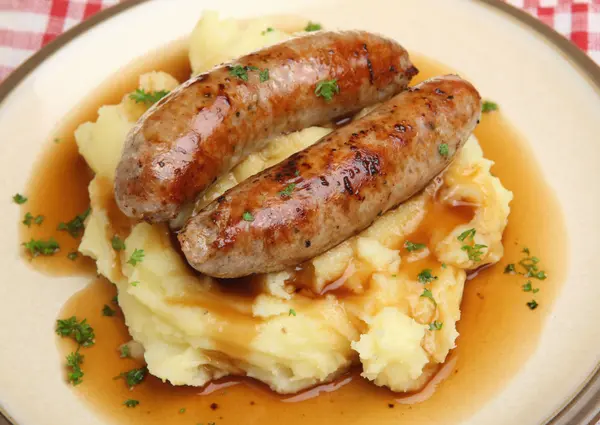
Bangers and Mash
Juicy sausages with creamy mashed potato and a rich onion gravy. Simple, hearty pub comfort food.

Bibimbap
Warm white rice topped with namul or kimchi and gochujang, soy sauce or doenjang with meat and vegetables
Kuyrdak
A hearty Kazakh fry-up of lamb with liver, heart and kidney, cooked with onion and potato. Traditionally made on the day an animal is slaughtered.
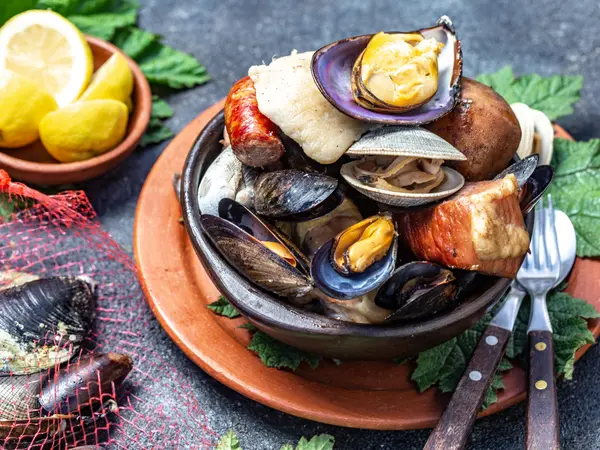
Curanto
A feast from Chiloé in southern Chile: clams, mussels, chicken, smoked pork, sausages and potatoes steamed together in one big pot.
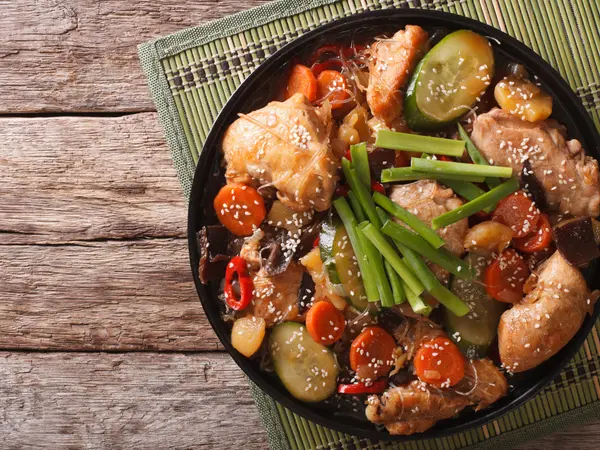
Jjimdak
Korea's soy-braised chicken with potatoes, carrots, mushrooms and glass noodles in a sweet and savory sauce. Serve with rice.
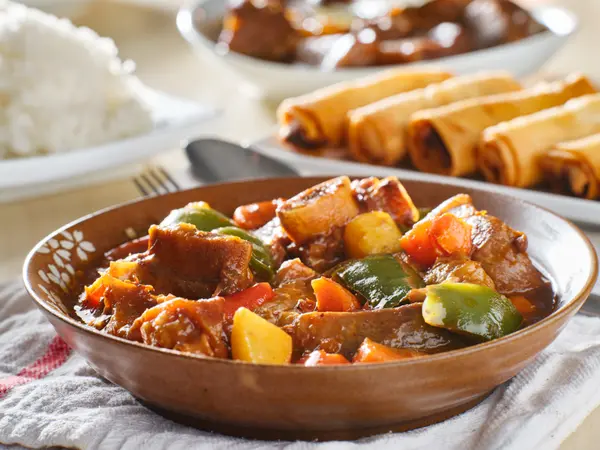
Kaldereta
The Philippines' rich beef stew in tomato sauce with liver spread, potatoes and peppers. A party favorite.
Kazakh Manty
Large steamed Kazakh dumplings filled with chopped lamb, onion, pumpkin and black pepper, cooked in a tiered steamer called a mantovarka.
Kleftiko
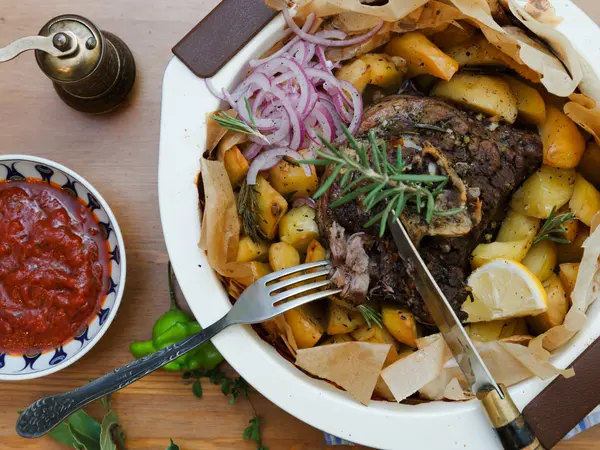
A sealed leg on lamb roasted slowly with garlic, lemon, herbs and potatoes